
www.industry-asia-pacific.com
22
'26
Written on Modified on
Hexavalent Chromium Soil Remediation in Chongqing
SUEZ, through its joint venture Chongqing Derun Simbond with Chongqing Derun Environment, secures a major heavy-metal remediation contract in southwest China.
www.suez.com
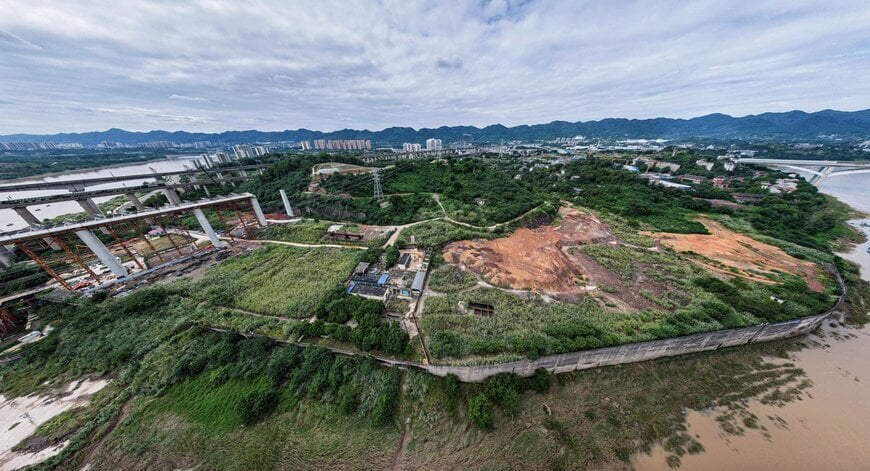
SUEZ, via its joint venture Chongqing Derun Simbond, has been awarded a hexavalent chromium contamination risk-mitigation project at the former Minfeng Chemical Plant site in Chongqing, addressing large-scale soil pollution linked to historical chromate production.
Remediation contract and scope
The contract, valued at approximately RMB 110 million, was awarded to a consortium led by Chongqing Derun Simbond based on its proposed technical solutions, experience in heavy-metal decontamination, and demonstrated project delivery capability. The project concerns the former Minfeng Chemical Plant, previously operated by Chongqing Chemical & Pharmaceutical Holding Group, located in Chongqing municipality.
The site, covering around 73.3 acres, has an estimated 2.7 million cubic metres of soil contaminated with hexavalent chromium. This form of chromium is highly toxic and mobile in soil and groundwater, presenting long-term environmental and health risks if not effectively contained or removed.
Technical approach and delivery model
As the EPC (engineering, procurement, and construction) contractor, the Chongqing Derun Simbond-led consortium will implement on-site ex-situ remediation and containment technologies. These methods involve excavating contaminated soil, treating it under controlled conditions, and applying engineered containment measures to prevent further dispersion of pollutants.
The use of ex-situ remediation enables tighter process control and verification of treatment effectiveness, which is critical for high-volume, high-risk contaminants such as hexavalent chromium. The project is scheduled for completion by April 2027, after which the site is expected to be suitable for repurposing, including potential use as parkland or for storage facilities, subject to regulatory approval.
Role within the Yangtze River Economic Belt
The project forms part of wider remediation efforts targeting contaminated industrial sites along the Yangtze River. The Yangtze River Economic Belt (YREB) spans 11 provincial-level regions from western inland China to the eastern coast and is home to more than 40% of the national population. While decades of industrialisation have driven economic development, they have also resulted in extensive soil and water pollution along the river corridor.
Remediation of legacy chemical plants is a key element of the YREB’s high-quality development strategy, which prioritises ecological conservation alongside economic activity. Addressing historical heavy-metal contamination is essential to safeguarding the watershed ecosystem and reducing environmental risks to downstream communities.
Joint venture capabilities and experience
Chongqing Derun Simbond, the joint venture between SUEZ and Chongqing Derun Environment, operates across soil, groundwater, and watershed remediation projects within the Yangtze River Economic Belt. The joint venture has delivered contaminated-site treatment projects in regions including Chongqing, Shanghai, Sichuan, and Jiangsu.
In soil and groundwater remediation, its technical portfolio includes heavy-metal decontamination solutions applied at sites such as Hanyuan County in Sichuan and Jiangbei District in Chongqing, which are cited by local authorities as reference projects. Beyond soil remediation, the joint venture has also deployed patented in-situ algae control and water-quality restoration technologies in deep lakes and reservoirs, including projects in Zhejiang province. This solution has received the Innovation Award for Franco-Chinese Teams.
Application context
The Minfeng Chemical Plant project reflects increasing regulatory and technical focus on remediating decommissioned chemical facilities in densely populated and environmentally sensitive regions. Large-scale soil treatment, combined with engineered containment, is a critical component of restoring such sites for safe secondary use while supporting long-term ecological objectives within the Yangtze River basin.
www.suez.com
