
www.industry-asia-pacific.com
29
'26
Written on Modified on
Bally Ribbon Mills showcases advanced textile solutions at Advanced Textiles Expo 2026
BRM will present high-performance fabrics, custom webbings and medical textile expertise, highlighting materials used in Mars rover landing systems and future space missions.
www.ballyribbon.com

Bally Ribbon Mills will showcase its engineered narrow fabrics, specialty webbings, and custom woven systems at Advanced Textiles Expo 2026, held November 3–5, 2026, in Orlando, Florida. The company plans to present material architectures developed to resolve structural integrity, weight, and environmental degradation issues in aerospace, defense, medical device, and industrial manufacturing sectors.
Core Technology and System Architecture
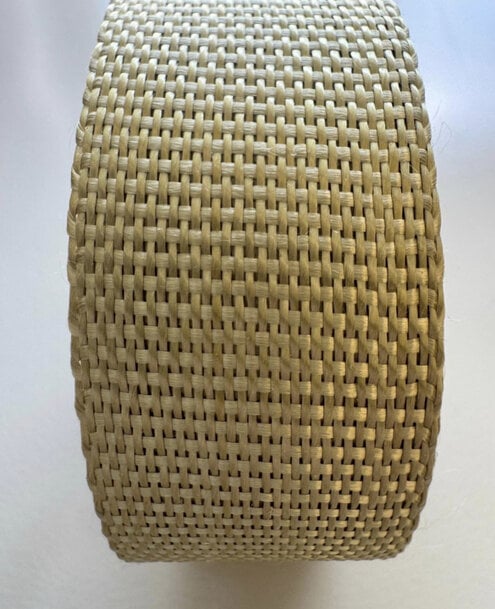
The presented technology encompasses precision woven narrow fabrics engineered from high-performance synthetic and inorganic polymers. Material formulations integrate poly-p-phenylenebenzobisoxazole, liquid-crystal polymer, para-aramid, meta-aramid, ultra-high-molecular-weight polyethylene, and polytetrafluoroethylene yarn systems. These continuous-filament fibers are processed using shuttle, needle, and multi-dimensional weaving equipment to control yarn tension, crimp angle, and cross-sectional density. System architectures yield precise dimensional tolerances and fiber orientation, preventing interfacial shearing, yarn displacement, and localized tensile fatigue under multi-axis loads. Thermal stability profiles are maintained across broad cryogenic to high-heat operating envelopes.
Deployment or Implementation
Engineered textiles integrate directly into composite laminates, mechanical assemblies, and flexible containment structures. Integration interfaces comply with standard commercial sewing, ultrasonic bonding, mechanical clamping, and resin transfer molding processes. Component architectures deploy in load-bearing deceleration assemblies, including parachute riser and deployment bridles utilized during the atmospheric descent stages of planetary landers. In biomedical assemblies, narrow webbings function within surgical implants and delivery systems, requiring biocompatibility validation and controlled elongation profiles under cyclic stress conditions.
Industry Applications
Target sectors include space exploration, defense aviation, commercial aerospace, and medical engineering. Primary applications involve deceleration harnesses, structural tie-downs, cargo handling restraints, and reinforced conduit sheathing. In medical manufacturing, precision weaving supports miniature tensile members for minimally invasive surgical instruments and permanent orthopedic prosthetics. Operational benefits include extended mechanical life under high dynamic loads, resistance to chemical exposure and radiation, flame prevention, and consistent mass-to-strength ratios across production runs.
Operational Impact and Performance Metrics
Material selection and warp-weft alignment allow mechanical engineers to tailor load elongation curves to specific damping and tensile thresholds. Tensile strength increases substantially while reducing system payload mass compared to conventional metals or unreinforced elastomeric cordage. The weave geometry resists abrasive wear, UV-induced polymer degradation, and dynamic mechanical flexure failure, ensuring repeatable deployment behavior in vacuum, aerospace descent, and pressurized operating conditions.
Edited by Natania Lyngdoh, Induportals editor, with AI assistance.
www.ballyribbon.com
