
www.industry-asia-pacific.com
21
'26
Written on Modified on
Industrial Exhaust Heat Recovery & Emission Control
GEA waste heat recovery systems capture high-temperature furnace flue gas to generate power and reduce glass production emissions.
www.gea.com
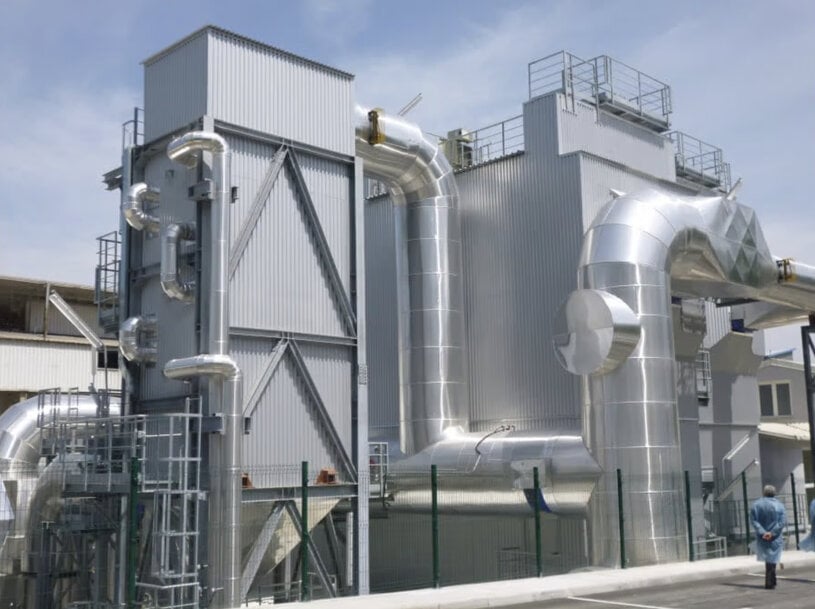
Emission control plant for glass manufacturing, including a waste heat recovery unit. (Photo: GEA)
At glasstec, held from October 20 to 23, 2026, in Düsseldorf, Germany, GEA Group presents integrated exhaust treatment and thermal recovery systems engineered to capture high-temperature furnace gases and control industrial glass production emissions.
Core Technology and System Architecture
Glass melting furnaces produce continuous high-temperature exhaust streams containing particulate matter and chemical pollutants. The platform transfers waste thermal energy from stack exhaust into a secondary medium for process heating or on-site electrical power generation via an Organic Rankine Cycle. In this operational configuration, thermal oil absorbs heat from the exhaust stream and transfers it to an organic working fluid that expands through a turbine. Thermal energy extraction interfaces directly with multi-pollutant abatement stages, including desulfurization, catalytic denitrification, and particulate filtration to remove sulfur oxides, nitrogen oxides, and dust before gas discharge.
Deployment or Implementation
The configuration operates as a stand-alone heat extraction unit or as an integrated exhaust gas cleaning system engineered for existing plant modernizations and greenfield installations. Technical deployment relies on specific process parameters, adjusting system surface area and materials according to exhaust temperature, volume flow rate, annual operating hours, and plant emission limits. Integration requires routing ductwork between furnace outlets, emission abatement stages, and power conversion turbines without interrupting furnace backpressure stability.
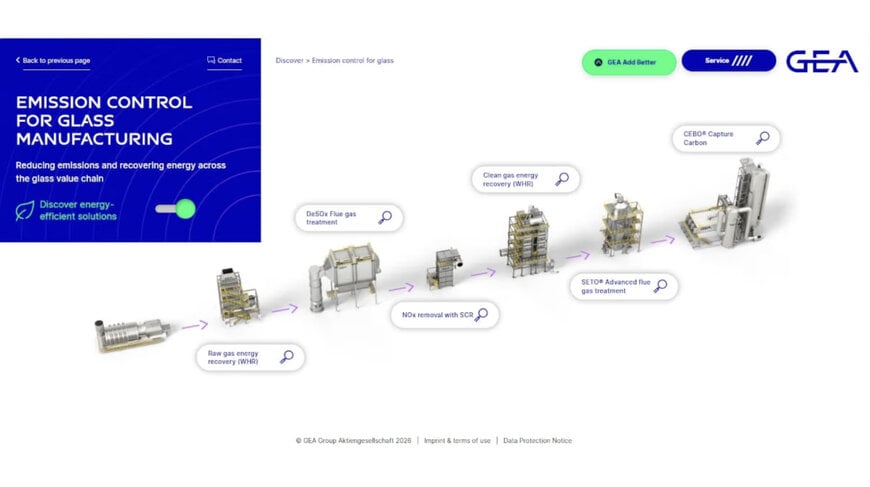
The interactive process line tour shows how emission control and energy recovery technologies can be combined to meet plant-specific requirements in glass manufacturing.
Industry Applications
The system is deployed across commercial glass manufacturing facilities requiring continuous thermal energy management. Concrete use cases include flat, container, and specialty glass melting furnaces operating under stringent emission caps. By recycling thermal exhaust directly into process heating or electrical power, operators lower secondary energy consumption, stabilize facility heat distribution, and meet statutory regional emission thresholds for air quality.
Operational Impact and Performance Metrics
With more than 140 exhaust gas cleaning installations in the glass sector, the recovery architecture directly offsets electrical consumption from the external power grid through localized energy generation. System viability is confirmed by Jens Lange, Senior Director Sales Industrial, BL Environmental at NPE BU ProTech: “Our role is to develop a robust solution around each customer’s process and make recovered energy reliably available for reuse.” The operational mechanism relies on closed-loop energy recovery, minimizing thermal loss through stacks and improving the net energy balance across primary melting lines.
Edited by Natania Lyngdoh, Induportals editor, with AI assistance.
www.gea.com
At glasstec, held from October 20 to 23, 2026, in Düsseldorf, Germany, GEA Group presents integrated exhaust treatment and thermal recovery systems engineered to capture high-temperature furnace gases and control industrial glass production emissions.
Core Technology and System Architecture
Glass melting furnaces produce continuous high-temperature exhaust streams containing particulate matter and chemical pollutants. The platform transfers waste thermal energy from stack exhaust into a secondary medium for process heating or on-site electrical power generation via an Organic Rankine Cycle. In this operational configuration, thermal oil absorbs heat from the exhaust stream and transfers it to an organic working fluid that expands through a turbine. Thermal energy extraction interfaces directly with multi-pollutant abatement stages, including desulfurization, catalytic denitrification, and particulate filtration to remove sulfur oxides, nitrogen oxides, and dust before gas discharge.
Deployment or Implementation
The configuration operates as a stand-alone heat extraction unit or as an integrated exhaust gas cleaning system engineered for existing plant modernizations and greenfield installations. Technical deployment relies on specific process parameters, adjusting system surface area and materials according to exhaust temperature, volume flow rate, annual operating hours, and plant emission limits. Integration requires routing ductwork between furnace outlets, emission abatement stages, and power conversion turbines without interrupting furnace backpressure stability.
The interactive process line tour shows how emission control and energy recovery technologies can be combined to meet plant-specific requirements in glass manufacturing.
Industry Applications
The system is deployed across commercial glass manufacturing facilities requiring continuous thermal energy management. Concrete use cases include flat, container, and specialty glass melting furnaces operating under stringent emission caps. By recycling thermal exhaust directly into process heating or electrical power, operators lower secondary energy consumption, stabilize facility heat distribution, and meet statutory regional emission thresholds for air quality.
Operational Impact and Performance Metrics
With more than 140 exhaust gas cleaning installations in the glass sector, the recovery architecture directly offsets electrical consumption from the external power grid through localized energy generation. System viability is confirmed by Jens Lange, Senior Director Sales Industrial, BL Environmental at NPE BU ProTech: “Our role is to develop a robust solution around each customer’s process and make recovered energy reliably available for reuse.” The operational mechanism relies on closed-loop energy recovery, minimizing thermal loss through stacks and improving the net energy balance across primary melting lines.
Edited by Natania Lyngdoh, Induportals editor, with AI assistance.
www.gea.com
