
www.industry-asia-pacific.com
15
'26
Written on Modified on
Advanced Refining and Petrochemical Conversion Platform
Honeywell Technologies supplies comprehensive UOP process units, catalysts, and engineering services to expand Hengyi Industries' Pulau Muara Besar facility to 20 million metric tons.
www.honeywell.com
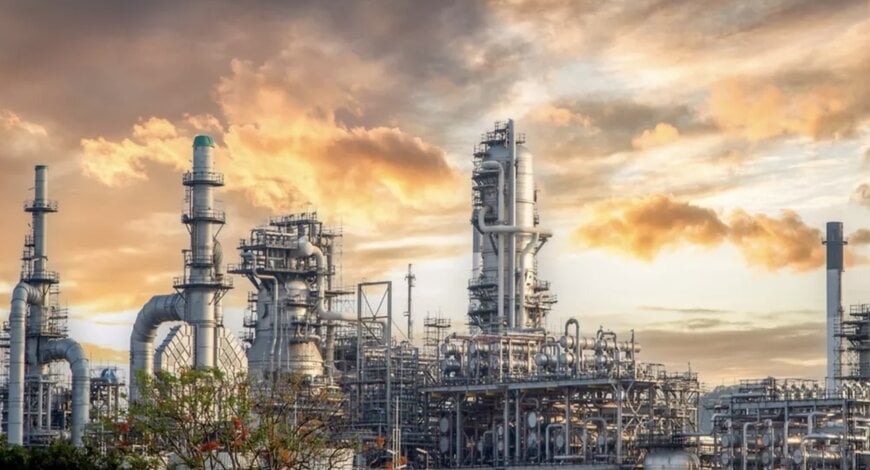
Refinery operators face shifting margin dynamics that prioritize integrated chemical production over conventional transportation fuel manufacturing. Converting straight-run petroleum cuts into high-purity chemical intermediates requires precise catalytic upgrading, high-pressure hydrogen management, and molecular-level separation trains to achieve maximum yield while minimizing energy losses. To address these downstream manufacturing challenges and capture growing demand for synthetic fibers and advanced polymers, Hengyi Industries selected Honeywell Technologies UOP to deliver the core conversion architecture for the Phase II expansion of its Pulau Muara Besar (PMB) industrial complex in Brunei.
Integrated Catalytic Conversion Architecture
Under the Phase II development program, the Pulau Muara Besar petrochemical site will scale overall crude-processing capacity to approximately 20 million metric tons per year. Honeywell Technologies UOP provides process licensing, front-end engineering design, specialized equipment, proprietary catalysts, and commissioning services to anchor several world-scale process units, including hydrocracking systems, an aromatics extraction complex, and catalytic dehydrogenation trains.
The processing flowsheet combines multiple interdependent UOP technologies engineered to upgrade low-value refinery cuts into petrochemical building blocks:
- Unicracking and Unionfining: These high-pressure catalytic hydroprocessing units treat atmospheric and vacuum gas oils, hydrocracking heavy hydrocarbons into lighter, paraffin-rich naphtha fractions while simultaneously removing sulfur, nitrogen, and metallic contaminants.
- CCR Platforming: Operates continuous catalyst regeneration reforming to crack, dehydrocyclize, and isomerize heavy naphtha cuts into high-octane, aromatics-rich reformate while generating the high-purity hydrogen required for hydrocracking loops.
- Aromatics Complex with Parex Technology: Incorporates light-desorbent Parex adsorptive separation to isolate high-purity paraxylene isomers alongside benzene extraction from reformate and pyrolysis gasoline streams.
- Butamer and C4 Oleflex: The Butamer isomerization process converts normal butane into isobutane, which then feeds the C4 Oleflex catalytic dehydrogenation unit to yield high-purity isobutylene, a primary precursor for synthetic elastomers, fuel additives, and specialized chemical resins.
Operational Synergy Across Multi-Phase Assets
Phase II builds directly on the industrial foundation established during the original development of the Pulau Muara Besar site. During Phase I, Honeywell Technologies supplied core process designs, engineering packages, proprietary adsorbents, and start-up support that established the site's initial operating baseline.
Integrating Phase II conversion units with existing site infrastructure allows Hengyi Industries to optimize energy balances, share hydrogen streams between continuous catalytic reforming and hydrotreating circuits, and route heavy hydrocarbon fractions directly into conversion units rather than low-margin fuel oil channels.
Additional Context
This section details technical specifications and competitive benchmarking not included in the original product announcement.
In large-scale refinery-to-chemicals conversion complexes, processing efficiency is benchmarked against the chemical conversion rate—the percentage of crude barrel mass converted into petrochemical products rather than transportation fuels. While traditional hydroskimming and FCC-oriented refineries typically achieve chemical conversion rates between 10 and 20 percent, modern deep-conversion complexes utilizing dual-stage hydrocracking and full aromatics loops benchmark between 40 and 60 percent chemical yield.
Within competitive process licensing, Honeywell UOP's Parex adsorptive separation benchmarks against Axens Eluxyl and low-temperature crystallization technologies. UOP's light-desorbent Parex flowsheets utilize selective zeolitic molecular sieves that operate at lower desorption temperatures and pressures, achieving greater than 99.7 percent paraxylene product purity with recovery efficiencies exceeding 97 percent per pass while reducing separation reboiler heat duties by up to 20 percent compared to heavy-desorbent systems. Similarly, C4 Oleflex catalytic dehydrogenation utilizes a moving-bed reactor design with continuous platinum catalyst regeneration (CCR), delivering single-train on-stream factors above 98 percent and avoiding the multi-reactor cyclic switching required in fixed-bed dehydrogenation schemes.
Edited by Romila DSilva, Induportals Editor, with AI assistance.
Phase II builds directly on the industrial foundation established during the original development of the Pulau Muara Besar site. During Phase I, Honeywell Technologies supplied core process designs, engineering packages, proprietary adsorbents, and start-up support that established the site's initial operating baseline.
Integrating Phase II conversion units with existing site infrastructure allows Hengyi Industries to optimize energy balances, share hydrogen streams between continuous catalytic reforming and hydrotreating circuits, and route heavy hydrocarbon fractions directly into conversion units rather than low-margin fuel oil channels.
Additional Context
This section details technical specifications and competitive benchmarking not included in the original product announcement.
In large-scale refinery-to-chemicals conversion complexes, processing efficiency is benchmarked against the chemical conversion rate—the percentage of crude barrel mass converted into petrochemical products rather than transportation fuels. While traditional hydroskimming and FCC-oriented refineries typically achieve chemical conversion rates between 10 and 20 percent, modern deep-conversion complexes utilizing dual-stage hydrocracking and full aromatics loops benchmark between 40 and 60 percent chemical yield.
Within competitive process licensing, Honeywell UOP's Parex adsorptive separation benchmarks against Axens Eluxyl and low-temperature crystallization technologies. UOP's light-desorbent Parex flowsheets utilize selective zeolitic molecular sieves that operate at lower desorption temperatures and pressures, achieving greater than 99.7 percent paraxylene product purity with recovery efficiencies exceeding 97 percent per pass while reducing separation reboiler heat duties by up to 20 percent compared to heavy-desorbent systems. Similarly, C4 Oleflex catalytic dehydrogenation utilizes a moving-bed reactor design with continuous platinum catalyst regeneration (CCR), delivering single-train on-stream factors above 98 percent and avoiding the multi-reactor cyclic switching required in fixed-bed dehydrogenation schemes.
Edited by Romila DSilva, Induportals Editor, with AI assistance.
