
www.industry-asia-pacific.com
10
'26
Written on Modified on
Fraunhofer IPMS Develops MEMS Spatial Light Modulators
Fraunhofer IPMS will present microelectromechanical spatial light modulators (SLMs) and customer evaluation kits for high-speed photonic applications at Photonix Japan 2026.
www.fraunhofer.de
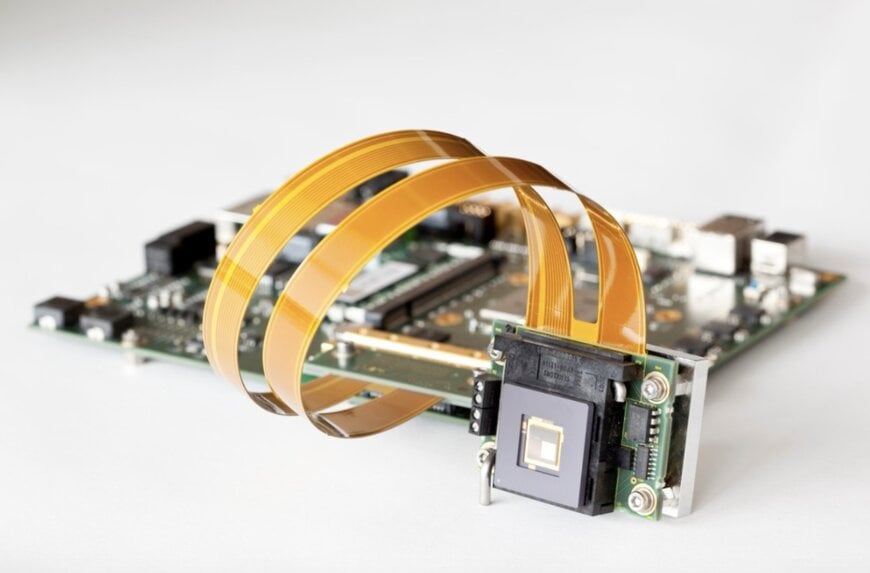
Customer Evaluation Kit with control electronics, connection cable, and 256 x 256 mirror device. © Fraunhofer IPMS
Optical Architectures and Applications
Spatial light modulators manipulate wavefront parameters at microscopic scale. In semiconductor lithography, DUV- and UV-compatible modulation architectures shape laser patterns to optimize wafer exposure. In optical microscopy, single-axis tilting mirror elements provide selective, high-resolution sample illumination. For laser materials processing, two-axis tilting micromirrors redirect optical energy with minimal beam attenuation to improve throughput in laser cutting and surface modification.
For quantum information processing, SLMs generate dynamic holographic beam profiles that act as optical tweezers to confine and organize arrays of neutral atoms. In holographic display applications, phase-modulating piston mirror arrays synthesize genuine three-dimensional wave fronts without relying on simulated stereoscopic depth cues.
Diffractive MEMS Evaluation Platforms
Fraunhofer IPMS offers evaluation kits that enable users to validate both tilting and vertical piston mirror configurations on a unified hardware and software platform. The kit includes control driving electronics, quick-start operating software, and a PC interface library.
The Diffractive MEMS Kit incorporates an array of 256 × 256 individually addressable tilting micromirrors, each measuring 16 µm along its edge. Each mirror element shifts across an analog range between baseline alignment and a designated tilt angle to direct incident light into specific diffraction orders, maintaining compatibility with deep ultraviolet and longer optical wavelengths.
"A diffractive optical element does not merely reflect light like a conventional mirror. Its specially designed structure diffracts the light, sending it in specific directions," stated Dr. Michael Wagner, Head of the Spatial Light Modulators Business Unit at Fraunhofer IPMS. "Our diffractive MEMS device features 256 × 256 individually addressable tilting mirror elements, each with an edge length of 16 micrometers. Each mirror element can be moved independently through an almost continuous range between its initial position and a defined tilted position. This allows light to be steered precisely in different directions. The device is suitable for both DUV light and longer wavelengths."
"Our evaluation kits enable users to validate SLM technology in their own application environment. For specific requirements, we develop custom SLMs—from the initial feasibility analysis to pilot production. Our expertise spans design, process development, and system integration," added Wagner.
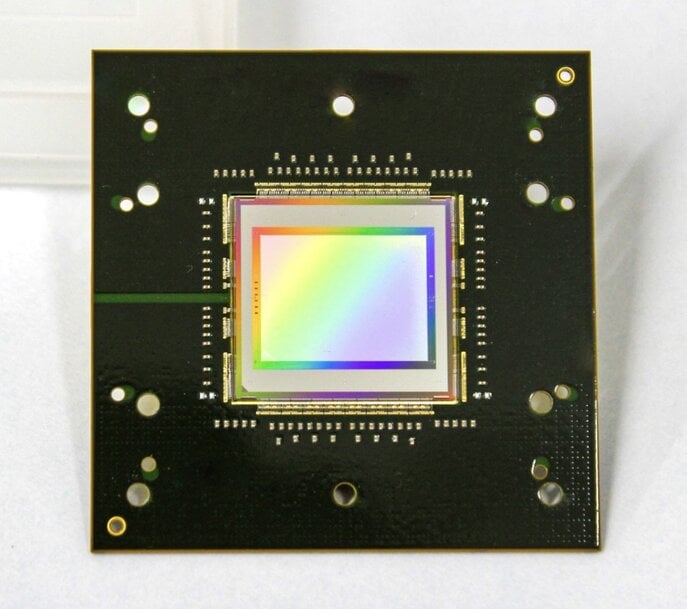
REALHOLO Chip developed by Fraunhofer IPMS. © Fraunhofer IPMS
Exhibition Demonstration at Photonix Japan 2026
Fraunhofer IPMS will demonstrate its spatial light modulators at Photonix Japan 2026, scheduled from September 30 to October 2, 2026, in Makuhari, Chiba, Japan. Located at Booth 49-39 in Hall 8, the display will feature the evaluation kits, high-performance SLM components, and acrylic-encapsulated device models. Patrick Recknagel will present the technology's operational principles, performance metrics, and use cases across industrial and research applications.
Additional Context
This section details technical specifications not included in the original news release.
MEMS-based spatial light modulators fabricated on complementary metal-oxide-semiconductor (CMOS) backplanes achieve high refresh rates compared to liquid crystal on silicon (LCoS) spatial light modulators, regularly reaching frame rates and modulation frequencies above 2 kHz to 10 kHz. In high-power laser and deep-ultraviolet lithography setups, micromirror surfaces are typically metallized with pure aluminum or dielectric multi-layer coatings to withstand continuous thermal loads and avoid phase drift at excimer laser wavelengths, including 193 nm and 248 nm. Electrostatic actuation structures beneath each pixel generate vertical travel or angular deflection by applying individual analog voltages between the mirror membrane and buried address electrodes, maintaining stroke precision down to sub-nanometer tolerances. Furthermore, high optical fill factors—frequently exceeding 85 to 90 percent—minimize unmodulated background reflections and stray light diffraction, which are critical parameters for optical tweezer trapping stability and coherent laser beam combining.
Edited by Romila DSilva, Induportals Editor, with AI assistance.
www.ipms.fraunhofer.de
