
www.industry-asia-pacific.com
02
'26
Written on Modified on
Overcoming Production Bottlenecks with Welding Process Innovation
An energy storage battery manufacturer has integrated Styler precision spot and laser welding systems to transition from manual, standalone workstations to an automated production line.
www.stylerwelding.com
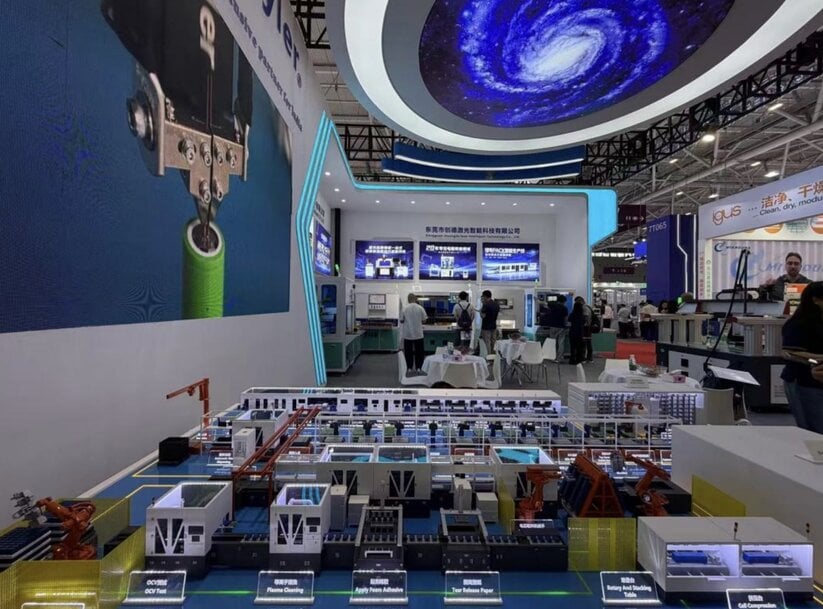
Application Area: Automated Battery Assembly Lines, Precision Welding Systems, Industrial Automation Integration
Industry Sector: Energy Storage Systems (ESS), Battery Manufacturing, Electronics Assembly
Battery manufacturers face strict quality metrics when assembling lithium battery modules and packs for heavy energy storage installations. Within automated battery assembly lines, maintaining precise control over electrical connections is vital to prevent electrical resistance spikes and safeguard long-term battery cycle life. Historically, the manufacturer managed its module assembly through decoupled, manual workstations. This setup introduced significant operational constraints: manual loading and unloading restricted throughput, welding consistency varied across production batches, and equipment changeovers required frequent manual tuning.
Operationally, these limitations restricted the factory's ability to scale manufacturing capacity efficiently. Furthermore, because individual workstations functioned in isolation, the manufacturer faced limited production traceability due to insufficient process data logging. To eliminate batch variation, reduce setup downtime, and capture detailed welding data across different cell configurations, the company upgraded its workflow by deploying an integrated welding line utilizing Styler's precision welding systems.
Deploying Dual Welding Methodologies to Optimize Production Throughput
The integration of advanced welding machinery and material handling automation transformed the factory floor into a continuous, data-backed assembly process:
- Precision Spot Welding Integration: The manufacturing line incorporates precision resistance spot welding systems to handle core battery tab connections. The system delivers stable welding current profiles and repeatable parameter regulation, which reduces manual process adjustments and establishes consistent electrode control across multiple cell layouts.
- Laser Welding for Complex Arrays: For complex battery pack structures requiring higher positional accuracy, selected assembly stages use high-precision laser welding equipment. This process provides controlled heat input to protect delicate internal cell chemistry while producing clean, structurally sound weld joints.
- Coordinated Production Line Automation: Rather than operating independent machinery, the manufacturer connected battery handling automation, welding heads, automatic inspection stations, and production data management software into a single workflow. This integration increases production throughput, reduces manual handling errors, and simplifies overall workflow scheduling.
- Data-Driven Traceability and Flexibility: The integrated software suite continuously monitors and captures active processing variables during every weld cycle. This logging provides comprehensive component traceability while the flexible machine architecture enables the factory to adapt to changing battery designs with minimal changeover downtime.
Additional Context
The section below examines the technical specifications and operational benchmarks not included in the original case study.
Technical Benchmarking of Battery Welding Technologies
Modern lithium battery pack assembly relies on creating reliable, low-resistance electrical connections between cell terminals and busbars. Manufacturers evaluate three primary joining methods based on material composition, joint geometry, and thermal tolerance thresholds: resistance spot welding, laser welding, and ultrasonic welding.
Resistance spot welding relies on localized electrical resistance and mechanical pressure to melt and fuse overlapping metal tabs. It provides a robust, cost-effective solution for standard nickel and steel tab configurations under 0.2 millimeters in thickness, but it can introduce electrode wear and variable contact resistance over long production runs. Laser welding utilizes a high-intensity, focused optical beam to achieve deep-penetration fusion welds. It delivers high processing speeds and a minimal heat-affected zone, making it suitable for welding thick copper and aluminum busbars on dense battery arrays without transferring damaging thermal loads to internal cell seals. Ultrasonic welding uses high-frequency acoustic vibrations under clamping pressure to create solid-state bonds. This method is highly effective for joining highly conductive, dissimilar metals without melting, though it demands strict acoustic shielding and flat, accessible geometries to prevent joint cracking.
Structural Comparison of Automation Configuration Architectures
Transitioning from independent manual assembly stations to an integrated, software-monitored automated welding line alters key operational performance benchmarks across manufacturing facilities:
The section below examines the technical specifications and operational benchmarks not included in the original case study.
Technical Benchmarking of Battery Welding Technologies
Modern lithium battery pack assembly relies on creating reliable, low-resistance electrical connections between cell terminals and busbars. Manufacturers evaluate three primary joining methods based on material composition, joint geometry, and thermal tolerance thresholds: resistance spot welding, laser welding, and ultrasonic welding.
Resistance spot welding relies on localized electrical resistance and mechanical pressure to melt and fuse overlapping metal tabs. It provides a robust, cost-effective solution for standard nickel and steel tab configurations under 0.2 millimeters in thickness, but it can introduce electrode wear and variable contact resistance over long production runs. Laser welding utilizes a high-intensity, focused optical beam to achieve deep-penetration fusion welds. It delivers high processing speeds and a minimal heat-affected zone, making it suitable for welding thick copper and aluminum busbars on dense battery arrays without transferring damaging thermal loads to internal cell seals. Ultrasonic welding uses high-frequency acoustic vibrations under clamping pressure to create solid-state bonds. This method is highly effective for joining highly conductive, dissimilar metals without melting, though it demands strict acoustic shielding and flat, accessible geometries to prevent joint cracking.
Structural Comparison of Automation Configuration Architectures
Transitioning from independent manual assembly stations to an integrated, software-monitored automated welding line alters key operational performance benchmarks across manufacturing facilities:
- Data Synchronization and Traceability: Under a traditional manual workstation framework, data capture is fragmented; individual machine settings and weld parameters must be manually audited or remain unrecorded, which limits total product traceability. Conversely, an integrated automated line provides fully unified data synchronization, where a centralized control network captures active current profiles, laser power delivery, and positioning coordinates for every processed cell in real time.
- Process Flexibility and Scaling: Legacy manual lines exhibit low flexibility, as changing between different battery module configurations requires mechanical layout modifications, tool swaps, and extensive physical setup downtime. An automated configuration features high flexibility, leveraging programmable automation and modular product carriers to execute rapid software-defined changeovers between distinct module styles.
- Material Handling and First-Pass Yield: Traditional sequential processing suffers from reduced yield control, as frequent manual handling between separate stations increases the risk of component misalignment, surface contamination, and structural defects. An integrated automated workflow delivers continuous asset optimization, employing automated conveyor systems and inline vision inspection to stabilize part alignment and boost first-pass manufacturing yields.
Edited by Romila DSilva, Induportals Editor, with AI assistance.
