
www.industry-asia-pacific.com
07
'26
Written on Modified on
JFE and Mitsubishi advance data center power project
JFE Holdings and Mitsubishi Corporation progress integrated power and data center development in Ohgishima to support AI infrastructure and stable energy supply.
www.mitsubishielectric.com
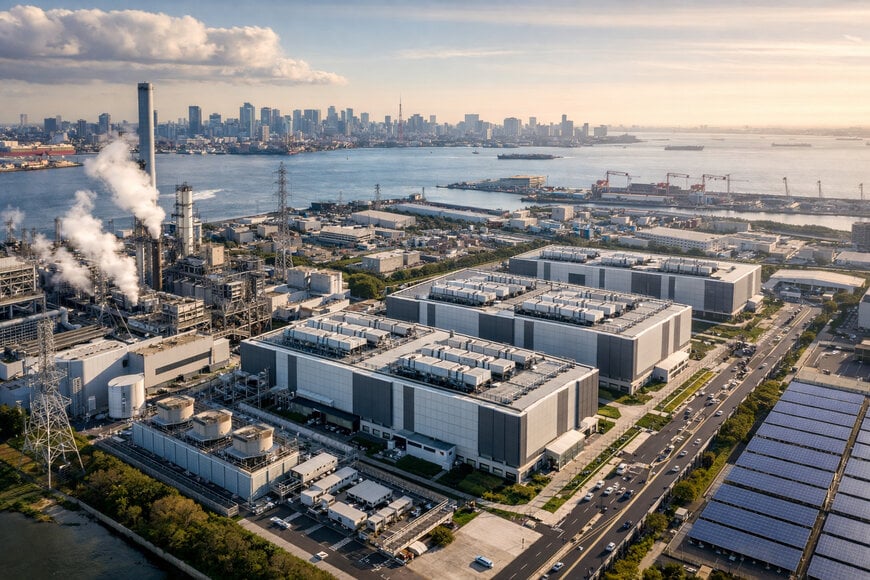
JFE Holdings, Inc. and Mitsubishi Corporation have signed a second memorandum of understanding to advance a joint power and data center development project in the Ohgishima area of the Keihin industrial district.
The initiative targets data center infrastructure and industrial power systems, addressing increasing demand for AI and cloud computing capacity alongside the need for stable, high-capacity energy supply.
Project context and partnership roles
The cooperation builds on an initial agreement signed in March 2025, under which both companies conducted technical and commercial feasibility studies. These assessments confirmed the viability of integrating data center operations with an existing captive power plant owned by JFE.
MC Digital Realty, Inc. supports the project as a development and operations partner, contributing expertise in large-scale data center deployment and management.
JFE is responsible for land development and infrastructure planning, aligned with its long-term industrial transformation strategies. Mitsubishi Corporation contributes through its experience in energy, infrastructure investment, and digital ecosystem development.
Technical concept and infrastructure design
The project centers on a five-hectare site adjacent to JFE’s captive power plant, which has a generation capacity of approximately 190 MW. This configuration enables direct integration of power generation and data center operations.
The initial phase targets a 60 MW data center, with planned commissioning in fiscal year 2031. The site is designed to support multiple facilities, with long-term expansion potentially reaching several hundred megawatts of IT capacity.
The integrated model combines:
- On-site power generation for reliable and cost-controlled electricity supply
- Scalable data center infrastructure for cloud and AI workloads
- Phased expansion aligned with demand growth
Future developments may include increased generation capacity and the integration of low-carbon energy sources, including hydrogen-based power, as part of the area’s planned energy transition.
Deployment strategy and land use transformation
The Ohgishima site offers strategic advantages, including proximity to central Tokyo (approximately 20 km) and the availability of large industrial land suitable for redevelopment.
The project represents a conversion of legacy industrial land into digital infrastructure, aligning with broader trends in repurposing heavy industry sites for next-generation applications.
Development activities will include site preparation, construction of data center facilities, and integration with existing and upgraded power infrastructure.
Operational impact and industry relevance
The integration of power generation with data center infrastructure addresses two key constraints in digital infrastructure deployment: access to suitable land and availability of stable, high-capacity electricity.
By combining these elements, the project aims to:
Deployment strategy and land use transformation
The Ohgishima site offers strategic advantages, including proximity to central Tokyo (approximately 20 km) and the availability of large industrial land suitable for redevelopment.
The project represents a conversion of legacy industrial land into digital infrastructure, aligning with broader trends in repurposing heavy industry sites for next-generation applications.
Development activities will include site preparation, construction of data center facilities, and integration with existing and upgraded power infrastructure.
Operational impact and industry relevance
The integration of power generation with data center infrastructure addresses two key constraints in digital infrastructure deployment: access to suitable land and availability of stable, high-capacity electricity.
By combining these elements, the project aims to:
- Improve energy reliability for data-intensive operations
- Reduce dependency on external grid constraints
- Support scalable deployment of AI and cloud computing systems
This model also enables more efficient energy utilization and provides a framework for incorporating future low-carbon energy sources.
Outlook for data center and energy integration
The agreement marks a transition toward detailed planning and potential joint venture formation. The collaboration reflects increasing convergence between energy infrastructure and digital infrastructure, particularly in regions with high demand for computing capacity.
By leveraging existing industrial assets and integrating them with new technologies, the project contributes to strengthening Japan’s digital infrastructure and industrial competitiveness.
Edited by an industrial journalist, Lekshman Ramdas, with AI assistance.
www.mitsubishielectric.com
Outlook for data center and energy integration
The agreement marks a transition toward detailed planning and potential joint venture formation. The collaboration reflects increasing convergence between energy infrastructure and digital infrastructure, particularly in regions with high demand for computing capacity.
By leveraging existing industrial assets and integrating them with new technologies, the project contributes to strengthening Japan’s digital infrastructure and industrial competitiveness.
Edited by an industrial journalist, Lekshman Ramdas, with AI assistance.
www.mitsubishielectric.com
