
www.industry-asia-pacific.com
09
'26
Written on Modified on
Electric Harbor Tug Commissioning in Singapore
PaxOcean Group and ABB complete system integration on a battery-electric tug, demonstrating scalable electric propulsion for regulated port operations in Singapore.
global.abb
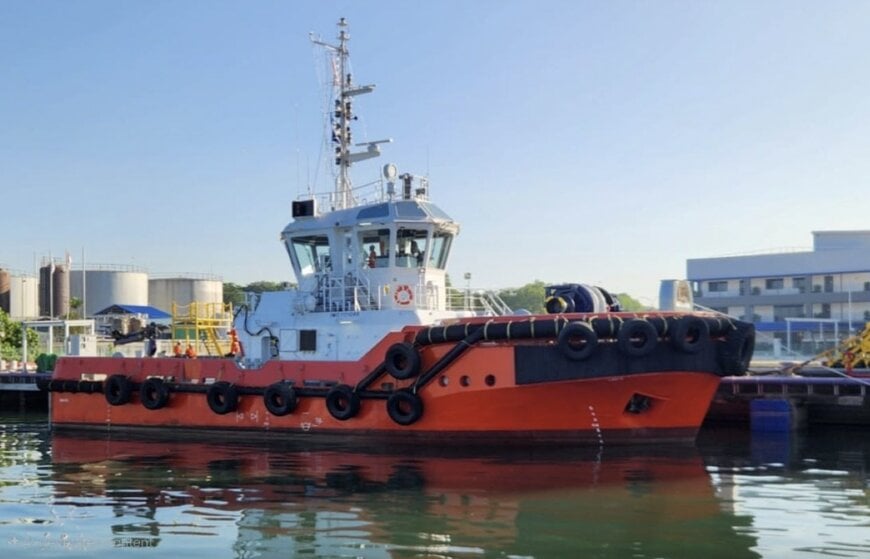
PaxOcean Group and ABB have completed commissioning of Singapore’s first fully electric harbor tug, marking a technical milestone ahead of the vessel’s planned entry into service in April 2026. The project demonstrates how battery-electric propulsion and DC power architectures can meet the high, rapidly varying load requirements of tug operations while complying with Singapore’s tightening maritime emissions regulations.
Regulatory and operational context
The Maritime and Port Authority of Singapore requires all new harbor craft to be fully electric or compatible with B100 biofuels or net-zero fuels by 2030. With more than 1,600 harbor vessels operating in Singapore, tugboats represent a technically demanding segment due to their need for short bursts of very high torque during towing and maneuvering.
The PXO-ACE-1 tug, built by PaxOcean Group, a subsidiary of Kuok Maritime Group, is intended as a reference platform for electrifying this segment while maintaining operational performance comparable to diesel-powered equivalents.
Vessel design and propulsion architecture
The 50-ton bollard pull tug is equipped with an integrated electric propulsion system supplied by ABB. At the core of the vessel’s powertrain is ABB’s Onboard DC Grid™ combined with the PEMS™ power and energy management system. This architecture distributes power via a DC network, reducing conversion losses associated with traditional AC systems and enabling more efficient integration of energy storage.
The tug is powered by a battery system with a total capacity of three megawatt-hours. The DC grid and energy management software are designed to handle wide and rapid fluctuations in power demand, including instant torque requirements typical of harbor towing operations. By minimizing energy conversion steps between batteries, propulsion drives, and auxiliary systems, the configuration improves drivetrain efficiency and extends operating range per charge.
Performance and crew environment considerations
Beyond emissions reduction, battery-electric propulsion significantly lowers onboard noise and vibration compared to diesel engines. This has direct implications for crew working conditions, particularly during prolonged harbor operations where exposure to vibration and exhaust noise is continuous.
From an operational perspective, the ability of the DC grid to respond quickly to load changes is critical. Tug operations involve frequent transitions between low-load maneuvering and high-load towing, making energy management and power availability central to vessel reliability.
Implications for harbor vessel electrification
The commissioning of PXO-ACE-1 provides a practical demonstration of how electric propulsion can be applied to high-duty harbor craft under real regulatory and operational constraints. As Singapore progresses toward its 2030 requirements, the project serves as an early validation of battery sizing, power management strategies, and DC-based electrical architectures for electric tugs.
The vessel’s deployment will offer further operational data on energy consumption, charging strategies, and lifecycle performance, informing the broader electrification of harbor fleets in Singapore and other ports facing similar regulatory and environmental pressures.
new.abb.com
