
www.industry-asia-pacific.com
26
'25
Written on Modified on
Waste-to-Energy Equipment Improves Operational Stability in Taiwan
Mitsubishi Heavy Industries Environmental & Chemical Engineering signed a contract to provide key incinerator units for a 900-ton-per-day waste-to-energy project in Taichung City.
www.mhi.com
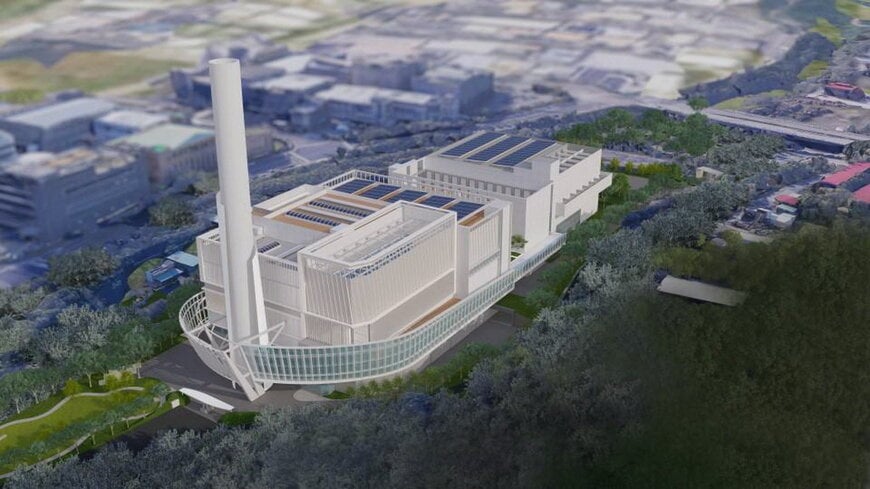
Taichung City’s Wenshan Waste-to-Energy (WtE) Plant in central Taiwan has served the municipality since 1995. By 2025, the existing infrastructure showed signs of ageing that risked reduced reliability, constrained waste processing capacity, and lower energy recovery efficiency. Municipal authorities sought to modernize the facility to ensure stable processing of municipal waste while meeting higher expectations for environmental performance and energy utilization.
To achieve these operational and environmental objectives, the Taichung City Environmental Protection Bureau selected a Build-Operate-Transfer (BOT) approach for the new plant, aiming for a long-term solution that would support both waste treatment and power generation efficiency.
The primary goals for Taichung City included improving waste incineration reliability, increasing thermal energy recovery, and reducing the environmental footprint of the WtE facility. The ageing plant’s equipment limited stable combustion control and its ability to convert heat into usable power effectively. Officials also prioritized solutions that would support extended operational life and align with broader carbon-neutral objectives at the municipal level.
Technical solution: V-type stoker incinerators
In December 2025, Mitsubishi Heavy Industries Environmental & Chemical Engineering Co., Ltd. (MHIEC), a subsidiary of Mitsubishi Heavy Industries (MHI) Group, signed a contract to supply major equipment — principally state-of-the-art V-type stoker waste incinerators — for the Taichung Wenshan WtE Plant under the BOT scheme.
The V-type stoker design optimizes the geometry of the grate and furnace so that the grate surface is oriented toward the flame centre during drying, combustion, and post-combustion phases. This configuration enhances radiant heat transfer, enabling more uniform incineration of heterogeneous municipal waste, reducing unburned residue in the ash, and stabilizing combustion processes. Such improvements directly influence energy recovery and emission characteristics.
MHIEC’s solution, selected for its technical maturity and performance track record, is positioned to deliver higher power generation efficiency compared with conventional incineration systems. Based on MHIEC’s delivery history in Taiwan — encompassing seven prior WtE facilities — local authorities assessed the company’s capability to support stable long-term operations.
Deployment and implementation
Under the contract concluded on December 19, 2025, MHIEC will supply the major equipment for the Taichung Wenshan WtE Plant, designed to process up to 900 tonnes per day (two units × 450 tonnes per day). The BOT arrangement establishes a 30-year operational horizon, with MHIEC’s equipment central to plant performance and reliability.
Although detailed commissioning timelines and on-site installation schedules have not been publicly disclosed, the contract’s structure indicates a long-term partnership tied to both supply and subsequent operational stability. MHIEC also plans to expand after-sales service capabilities to support the plant throughout its lifecycle.
The introduction of V-type stoker incinerators is expected to yield several operational benefits:
- Enhanced combustion stability across varying waste compositions, contributing to consistent waste throughput.
- Reduced unburned residue in ash, lowering environmental impact and facilitating compliance with emissions regulations.
- Improved power generation efficiency — a key performance metric for waste-to-energy systems seeking to maximize energy recovery while minimizing greenhouse gas intensity.
Delivering enhanced environmental performance and supporting carbon-neutral goals aligns with Taichung City’s broader sustainability strategy. The contract also underscores a trend in municipal infrastructure investment toward advanced thermal-treatment technologies that balance waste management with energy recovery.
The Taichung Wenshan Waste-to-Energy Plant’s redevelopment reflects a strategic shift toward modernization of key municipal infrastructure in Taiwan. By deploying advanced V-type stoker incinerators supplied by MHIEC, the city aims to resolve equipment ageing issues, improve combustion and energy efficiency, and support environmental objectives over a multi-decade operational timeframe.
www.mhi.com
The Taichung Wenshan Waste-to-Energy Plant’s redevelopment reflects a strategic shift toward modernization of key municipal infrastructure in Taiwan. By deploying advanced V-type stoker incinerators supplied by MHIEC, the city aims to resolve equipment ageing issues, improve combustion and energy efficiency, and support environmental objectives over a multi-decade operational timeframe.
www.mhi.com
