
Mineral casting partnership for Korean machine tools
RAMPF and TAEKEONG align to supply EPUMENT mineral casting for high-precision mechanical engineering applications in South Korea.
www.rampf-group.com
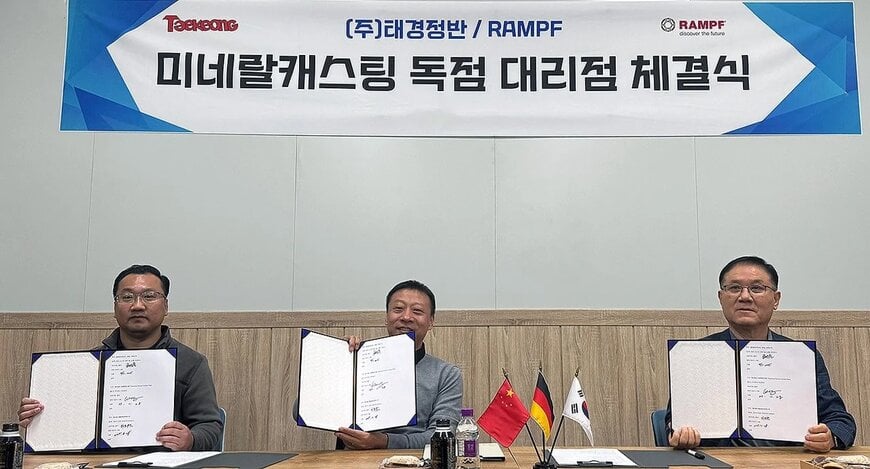
RAMPF China has entered a strategic cooperation agreement with TAEKEONG Co., Ltd. to support the deployment of EPUMENT® mineral casting technology in South Korea, targeting high-precision and highly dynamic industrial machinery.
Partnership scope and responsibilities
Under the agreement, RAMPF China will manufacture the EPUMENT® mineral casting material and provide application engineering and technical support. TAEKEONG will be responsible for local sales, assembly, and after-sales service, leveraging its established network within Korea’s mechanical engineering and industrial equipment sectors.
This division of responsibilities is intended to combine RAMPF’s materials and process expertise with TAEKEONG’s local market access and service capabilities, enabling closer support for machine builders and end users.
Role of mineral casting in precision machinery
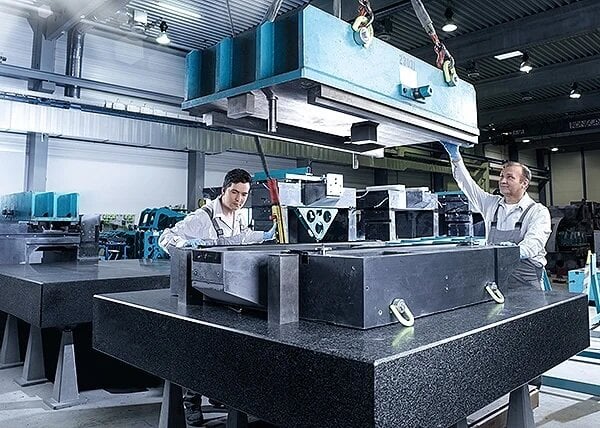
Mineral casting, also referred to as polymer concrete, is increasingly used in machine beds and structural components where dynamic stiffness, vibration damping, and dimensional stability are critical. Compared with welded steel or cast iron structures, mineral casting offers significantly higher internal damping, which can reduce vibration amplitudes during high-speed machining and improve surface quality and positioning accuracy.
EPUMENT® mineral casting is designed for applications involving rapid accelerations and decelerations, such as semiconductor manufacturing equipment, laser systems, solar module production lines, and high-end machine tools.
Manufacturing and integration characteristics
EPUMENT® is produced using a cold casting process, which allows functional elements such as sensors, cooling channels, cable ducts, and actuators to be integrated directly into the machine structure during casting. This approach can reduce secondary machining and assembly steps while improving thermal and mechanical integration within the machine bed.
The material is used for both complete machine bases and structural components in production equipment where high geometric accuracy and repeatability are required.
Market context in South Korea
South Korea has a strong base of precision machinery manufacturers supplying semiconductor, electronics, and advanced manufacturing industries. These sectors place increasing demands on machine dynamics, thermal stability, and vibration control as process tolerances tighten and throughput requirements rise.
By establishing a local partnership, the EPUMENT® technology can be adapted more closely to regional machine designs and production standards, while providing local technical support throughout the equipment lifecycle.
Industrial and sustainability considerations
In addition to mechanical performance, EPUMENT® mineral casting is designed with recyclability in mind, aligning with broader industry efforts to reduce the environmental footprint of machine tool construction. For machine builders, this can support compliance with sustainability objectives alongside performance requirements.
The partnership positions mineral casting as an alternative structural technology for Korean machine builders seeking to improve dynamic performance without significantly increasing system complexity.
Outlook for deployment
Through coordinated manufacturing, technical support, and local service, RAMPF and TAEKEONG aim to support wider adoption of mineral casting structures in Korea’s high-precision machinery sector. The collaboration reflects a broader trend toward advanced structural materials that address vibration, accuracy, and integration challenges in next-generation production equipment.
This agreement establishes a localized supply and support framework for mineral casting technology, addressing the technical requirements of high-performance mechanical engineering applications in South Korea.
www.rampf-group.com
