
www.industry-asia-pacific.com
04
'26
Written on Modified on
How Flexible Automation Is Reshaping Industrial Manufacturing
Manufacturers are taking a closer look at software-defined automation as they seek greater production flexibility, shorter changeover times and more efficient ways to modernize existing equipment.
induportals-media-publishing.com
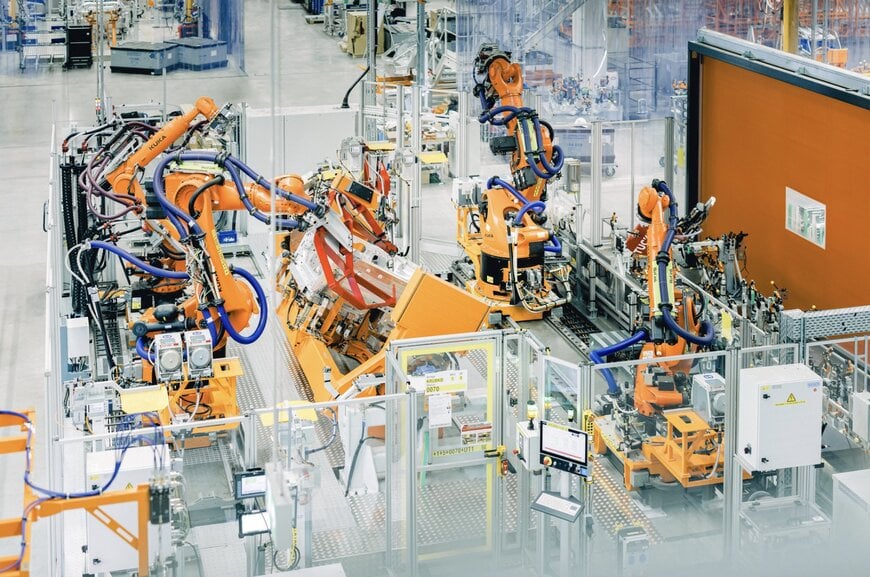
Industrial robots operate in Audi's automotive body shop, where Siemens virtual PLC technology supports the transition toward software-based production control. Source: Siemens
Industrial automation has traditionally depended on dedicated controllers, fixed production sequences and equipment designed for specific manufacturing tasks. These systems have served manufacturers well, particularly where production volumes are high and processes rarely change. However, shorter product lifecycles, growing customization requirements and pressure to reduce downtime are prompting companies to reconsider how their automation systems are designed.
One approach gaining attention is the software-defined factory, where control functions and production applications are increasingly managed through software rather than being tied exclusively to dedicated hardware.
The concept is not entirely new. Software-based control has been available for years, but advances in industrial computing, virtualization, artificial intelligence (AI) and communication technologies are making wider implementation more practical.
For manufacturers, the attraction lies in being able to modify production processes, introduce equipment and update control applications without extensive changes to existing automation infrastructure.
Market Research Points to Growing Demand
Research companies expect software-defined automation to gain ground as manufacturers invest in more adaptable production systems.
According to The Business Research Company's Software-Defined Automation Global Market Report 2026, the global market is expected to grow from US$46.63 billion in 2025 to US$54.09 billion in 2026, reaching US$96.98 billion by 2030. The forecast represents annual growth of approximately 15.7% between 2026 and 2030. The study covers software-defined automation across several industries, rather than manufacturing alone.
ABI Research offers a more specific assessment of the industrial market. In June 2026, the firm forecast that industrial AI revenue associated with software-defined automation would exceed US$5 billion by 2035.
The research points to increasing use of virtual controllers, industrial PCs and AI-supported engineering tools. ABI Research also suggests that agentic AI could reduce certain industrial code-development times by as much as 50%, although actual savings will depend on the application and engineering requirements.
Meanwhile, MarketsandMarkets projects that the broader smart manufacturing market will approach US$996 billion by 2032. Its forecast includes industrial robotics, digital twins, manufacturing software and other connected technologies.
While these figures describe different market segments, they reflect the growing importance of software in industrial automation investment.
Moving Beyond Dedicated Control Hardware
In a conventional factory, programmable logic controllers (PLCs) perform control functions through dedicated hardware. Changing production sequences or adding equipment can involve programming modifications, hardware integration and commissioning work.
Software-defined automation offers a different arrangement. Certain control functions can run on industrial PCs, edge computing devices or virtualized platforms, allowing applications to be deployed and managed with greater independence from the underlying hardware.
Virtual PLCs are an important part of this development. Instead of requiring a separate physical controller for every application, compatible control workloads can operate as software instances on suitable computing infrastructure.
Container-based software deployment can also simplify application updates and maintenance. Technologies such as OPC UA and the IEC 61499 standard support communication and distributed automation, although compatibility between suppliers remains a practical concern.
This does not mean conventional PLCs will disappear. Dedicated controllers remain important where precise timing, functional safety and demanding motion-control requirements are involved. For many manufacturers, combining existing control hardware with newer software platforms will be a more realistic option than replacing entire systems.
Siemens Expands Virtual Control Capabilities
Siemens is among the major automation suppliers developing software-defined control technologies.
Its SIMATIC S7-1500V virtual PLC allows control applications to operate within the Siemens Industrial Edge environment. Compatibility with the TIA Portal engineering platform means manufacturers can continue using familiar programming tools while introducing virtualized control.
Automotive manufacturer Audi has explored the technology as part of efforts to modernize production control and reduce reliance on dedicated controller hardware.
Siemens is also extending its work in digital twins. At CES 2026, the company introduced Digital Twin Composer, which combines simulation capabilities, industrial data and NVIDIA Omniverse technology to help manufacturers evaluate production changes virtually.
Siemens' work with PepsiCo demonstrates how digital simulation can help manufacturers evaluate production processes before making physical changes. According to Siemens, an initial deployment resulted in a 20% increase in throughput, with potential capital expenditure savings of 10–15% through improved production planning and virtual testing.
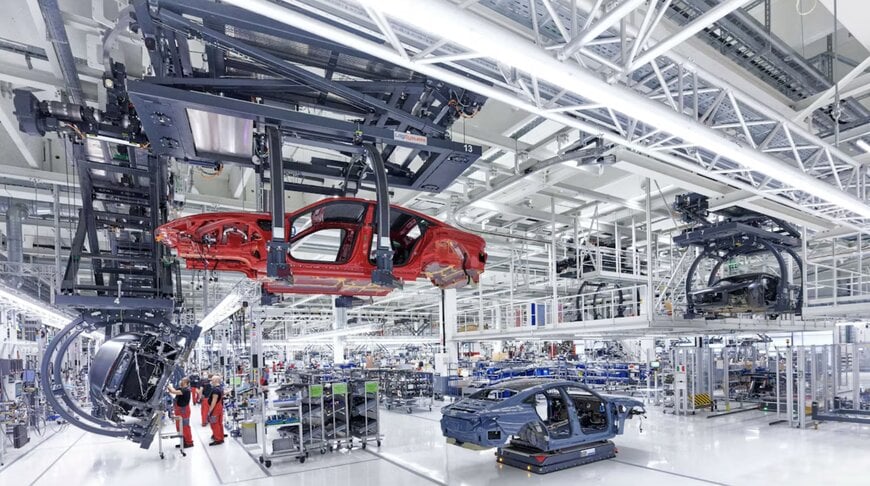
Audi is introducing virtualized control systems in its production facilities using Siemens SIMATIC S7-1500V technology, allowing automation applications to operate on an IT-based infrastructure. Source: Siemens
Other suppliers are taking different approaches.
Schneider Electric's EcoStruxure Automation Expert uses an IEC 61499-based architecture intended to make automation applications less dependent on specific hardware. In June 2026, Schneider Electric also announced an industrial automation modernization offering with Hewlett Packard Enterprise.
Phoenix Contact has introduced Virtual PLCnext Control, which enables PLC applications to operate in containerized environments. Bosch Rexroth continues to develop its ctrlX AUTOMATION platform, while CODESYS provides software-based control technologies for different hardware platforms.
Together, these developments show how automation suppliers are extending their offerings beyond conventional controllers into software platforms and engineering services.
New Developments in Factory Automation
Several technologies are contributing to the move toward software-driven production.
AI-assisted engineering is receiving considerable attention, particularly for PLC programming, troubleshooting and maintenance. Although these tools may reduce routine engineering work, control programs still require testing and validation before deployment.
Digital twins are becoming more useful in production planning and commissioning. Engineers can simulate machine operations, test control sequences and identify possible problems before making changes on the factory floor.
Industrial edge computing is another important development. Processing data closer to machinery can support faster analysis and reduce dependence on remote computing systems for time-sensitive applications.
Modular automation is also gaining interest among manufacturers handling multiple product variants. Software-based control can make it easier to adjust production sequences, although physical tooling and equipment limitations still affect changeover times.
Greater connectivity brings additional concerns. As industrial control systems become more software-dependent, cybersecurity, network reliability and software maintenance will require closer attention.
Outlook: A Gradual Shift Rather Than a Complete Replacement
Software-defined automation is expected to develop further as industrial AI, virtual controllers and digital engineering tools become more capable.
Over the coming years, manufacturers are likely to use software platforms more extensively for equipment monitoring, production adjustments, commissioning and maintenance. Greater interoperability could also make it easier to introduce new machinery without redesigning entire control systems.
Nevertheless, the transition will take time. Existing automation equipment often remains operational for decades, and manufacturers will need convincing technical and economic reasons to change established systems.
Rather than replacing conventional automation outright, software-defined technologies are likely to become part of hybrid manufacturing environments where dedicated hardware and flexible software applications operate together.
For manufacturers facing frequent product changes and increasingly complex production requirements, the value of this approach will depend on whether it can reduce engineering time, limit disruption and make existing equipment more adaptable.
The direction is becoming clearer: industrial automation is moving toward systems in which software plays a larger role in determining how production equipment is configured, managed and improved.
Article contributed by Kathryn Gerardino-Elagio, Editor-in-Chief, Ringier Trade Media, South East Asia.
Industrial automation has traditionally depended on dedicated controllers, fixed production sequences and equipment designed for specific manufacturing tasks. These systems have served manufacturers well, particularly where production volumes are high and processes rarely change. However, shorter product lifecycles, growing customization requirements and pressure to reduce downtime are prompting companies to reconsider how their automation systems are designed.
One approach gaining attention is the software-defined factory, where control functions and production applications are increasingly managed through software rather than being tied exclusively to dedicated hardware.
The concept is not entirely new. Software-based control has been available for years, but advances in industrial computing, virtualization, artificial intelligence (AI) and communication technologies are making wider implementation more practical.
For manufacturers, the attraction lies in being able to modify production processes, introduce equipment and update control applications without extensive changes to existing automation infrastructure.
Market Research Points to Growing Demand
Research companies expect software-defined automation to gain ground as manufacturers invest in more adaptable production systems.
According to The Business Research Company's Software-Defined Automation Global Market Report 2026, the global market is expected to grow from US$46.63 billion in 2025 to US$54.09 billion in 2026, reaching US$96.98 billion by 2030. The forecast represents annual growth of approximately 15.7% between 2026 and 2030. The study covers software-defined automation across several industries, rather than manufacturing alone.
ABI Research offers a more specific assessment of the industrial market. In June 2026, the firm forecast that industrial AI revenue associated with software-defined automation would exceed US$5 billion by 2035.
The research points to increasing use of virtual controllers, industrial PCs and AI-supported engineering tools. ABI Research also suggests that agentic AI could reduce certain industrial code-development times by as much as 50%, although actual savings will depend on the application and engineering requirements.
Meanwhile, MarketsandMarkets projects that the broader smart manufacturing market will approach US$996 billion by 2032. Its forecast includes industrial robotics, digital twins, manufacturing software and other connected technologies.
While these figures describe different market segments, they reflect the growing importance of software in industrial automation investment.
Moving Beyond Dedicated Control Hardware
In a conventional factory, programmable logic controllers (PLCs) perform control functions through dedicated hardware. Changing production sequences or adding equipment can involve programming modifications, hardware integration and commissioning work.
Software-defined automation offers a different arrangement. Certain control functions can run on industrial PCs, edge computing devices or virtualized platforms, allowing applications to be deployed and managed with greater independence from the underlying hardware.
Virtual PLCs are an important part of this development. Instead of requiring a separate physical controller for every application, compatible control workloads can operate as software instances on suitable computing infrastructure.
Container-based software deployment can also simplify application updates and maintenance. Technologies such as OPC UA and the IEC 61499 standard support communication and distributed automation, although compatibility between suppliers remains a practical concern.
This does not mean conventional PLCs will disappear. Dedicated controllers remain important where precise timing, functional safety and demanding motion-control requirements are involved. For many manufacturers, combining existing control hardware with newer software platforms will be a more realistic option than replacing entire systems.
Siemens Expands Virtual Control Capabilities
Siemens is among the major automation suppliers developing software-defined control technologies.
Its SIMATIC S7-1500V virtual PLC allows control applications to operate within the Siemens Industrial Edge environment. Compatibility with the TIA Portal engineering platform means manufacturers can continue using familiar programming tools while introducing virtualized control.
Automotive manufacturer Audi has explored the technology as part of efforts to modernize production control and reduce reliance on dedicated controller hardware.
Siemens is also extending its work in digital twins. At CES 2026, the company introduced Digital Twin Composer, which combines simulation capabilities, industrial data and NVIDIA Omniverse technology to help manufacturers evaluate production changes virtually.
Siemens' work with PepsiCo demonstrates how digital simulation can help manufacturers evaluate production processes before making physical changes. According to Siemens, an initial deployment resulted in a 20% increase in throughput, with potential capital expenditure savings of 10–15% through improved production planning and virtual testing.
Audi is introducing virtualized control systems in its production facilities using Siemens SIMATIC S7-1500V technology, allowing automation applications to operate on an IT-based infrastructure. Source: Siemens
Other suppliers are taking different approaches.
Schneider Electric's EcoStruxure Automation Expert uses an IEC 61499-based architecture intended to make automation applications less dependent on specific hardware. In June 2026, Schneider Electric also announced an industrial automation modernization offering with Hewlett Packard Enterprise.
Phoenix Contact has introduced Virtual PLCnext Control, which enables PLC applications to operate in containerized environments. Bosch Rexroth continues to develop its ctrlX AUTOMATION platform, while CODESYS provides software-based control technologies for different hardware platforms.
Together, these developments show how automation suppliers are extending their offerings beyond conventional controllers into software platforms and engineering services.
New Developments in Factory Automation
Several technologies are contributing to the move toward software-driven production.
AI-assisted engineering is receiving considerable attention, particularly for PLC programming, troubleshooting and maintenance. Although these tools may reduce routine engineering work, control programs still require testing and validation before deployment.
Digital twins are becoming more useful in production planning and commissioning. Engineers can simulate machine operations, test control sequences and identify possible problems before making changes on the factory floor.
Industrial edge computing is another important development. Processing data closer to machinery can support faster analysis and reduce dependence on remote computing systems for time-sensitive applications.
Modular automation is also gaining interest among manufacturers handling multiple product variants. Software-based control can make it easier to adjust production sequences, although physical tooling and equipment limitations still affect changeover times.
Greater connectivity brings additional concerns. As industrial control systems become more software-dependent, cybersecurity, network reliability and software maintenance will require closer attention.
Outlook: A Gradual Shift Rather Than a Complete Replacement
Software-defined automation is expected to develop further as industrial AI, virtual controllers and digital engineering tools become more capable.
Over the coming years, manufacturers are likely to use software platforms more extensively for equipment monitoring, production adjustments, commissioning and maintenance. Greater interoperability could also make it easier to introduce new machinery without redesigning entire control systems.
Nevertheless, the transition will take time. Existing automation equipment often remains operational for decades, and manufacturers will need convincing technical and economic reasons to change established systems.
Rather than replacing conventional automation outright, software-defined technologies are likely to become part of hybrid manufacturing environments where dedicated hardware and flexible software applications operate together.
For manufacturers facing frequent product changes and increasingly complex production requirements, the value of this approach will depend on whether it can reduce engineering time, limit disruption and make existing equipment more adaptable.
The direction is becoming clearer: industrial automation is moving toward systems in which software plays a larger role in determining how production equipment is configured, managed and improved.
Article contributed by Kathryn Gerardino-Elagio, Editor-in-Chief, Ringier Trade Media, South East Asia.
