
www.industry-asia-pacific.com
18
'26
Written on Modified on
Decentralized Power Generation Systems for Japanese Data Centres
Tokyo Gas Engineering Solutions evaluates engine-based generation platforms with Wärtsilä to support digital infrastructure under constrained grid conditions.
www.wartsila.com
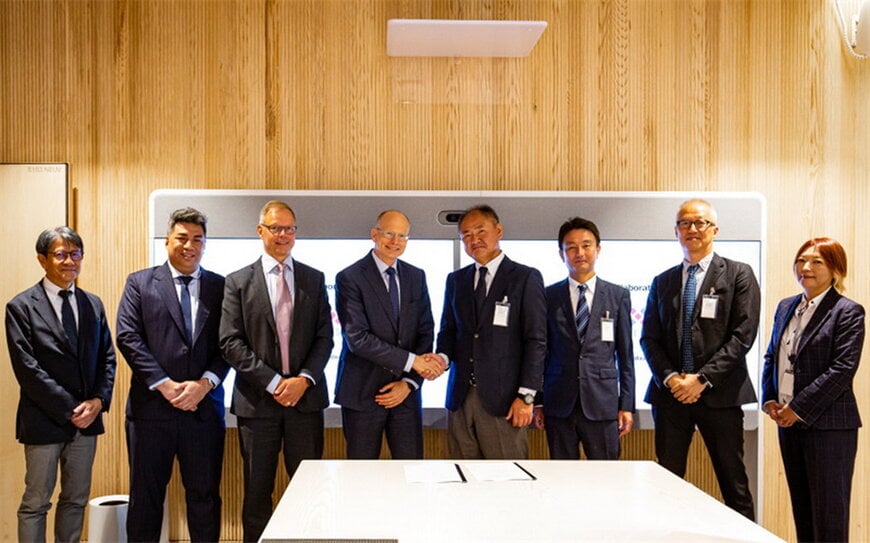
Wärtsilä and Tokyo Gas Engineering Solutions entered a Memorandum of Understanding in Helsinki in August 2026 to assess decentralized power supply systems for data centres in Japan. The initiative addresses severe electrical grid connection constraints and extended procurement timelines through on-site and off-grid generation architectures.
Operational Challenges and Market Context
Accelerated deployment of cloud computing and AI computation has driven substantial energy requirements across digital infrastructure assets. Connecting large-scale facilities to the national transmission network frequently encounters capacity limits and deployment delays. To maintain commissioning schedules and meet high-uptime operational criteria, operators require independent, primary generation assets capable of continuous operation without regional grid dependency.
System Architecture and Partner Responsibilities
The joint evaluation centers on gas-fired and dual-fuel internal combustion engine plants deployed at data facilities developed by Tokyo Gas Engineering Solutions Co., Ltd. The framework divides tasks between domestic integration and power block design:
- Tokyo Gas Engineering Solutions oversees local site selection, project development, and regional integration requirements.
- Wärtsilä provides engineering feasibility models, balancing configurations, and engine operating parameters.
The planned generation platform relies on modular reciprocating engines that consume less water and fuel than conventional industrial gas turbines. These units deliver rapid ramp-up performance, mitigating transient variations in computational electrical loads, while modular scalability matches phased server capacity additions.
Implementation Scope
Joint engineering teams are developing initial technical concepts, establishing operational baseline parameters, and conducting technical feasibility studies across designated Japanese development sites. The work assesses how engine-driven baseload and peaking capacity interface with existing facility electrical networks, ensuring transient load stability and fuel flexibility under continuous operation.
Anders Lindberg, President of Wärtsilä Energy and Executive Vice President of Wärtsilä, stated: "By combining our respective strengths, we can evaluate solutions that provide the flexibility, scalability and speed required to support Japan’s growing digital infrastructure needs."
Edited by Evgeny Churilov, Induportals Media - Adapted by AI.
www.wartsila.com
Implementation Scope
Joint engineering teams are developing initial technical concepts, establishing operational baseline parameters, and conducting technical feasibility studies across designated Japanese development sites. The work assesses how engine-driven baseload and peaking capacity interface with existing facility electrical networks, ensuring transient load stability and fuel flexibility under continuous operation.
Anders Lindberg, President of Wärtsilä Energy and Executive Vice President of Wärtsilä, stated: "By combining our respective strengths, we can evaluate solutions that provide the flexibility, scalability and speed required to support Japan’s growing digital infrastructure needs."
Edited by Evgeny Churilov, Induportals Media - Adapted by AI.
www.wartsila.com
