
www.industry-asia-pacific.com
03
'26
Written on Modified on
ABB to power New Zealand’s rail-enabled ferries for Cook Strait
Reliability, flexibility and environmental performance of two new ships based on integrated ABB systems featuring Azipod propulsion.
global.abb
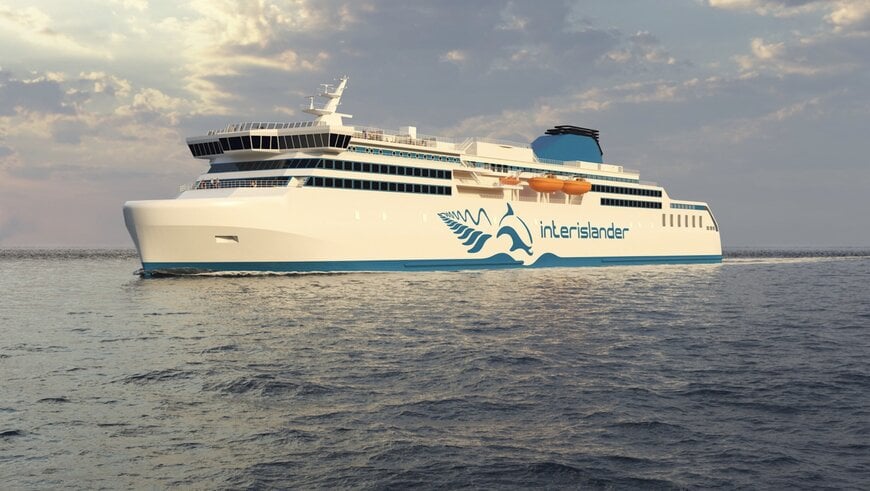
ABB has been selected as the power, propulsion, and automation technology partner for two new Ro-Pax vessels, named Kupe and Cook. The vessels form part of the Cook Strait Ferry Replacement Programme, a key infrastructure investment managed by New Zealand Government entity Ferry Holdings Limited. Built by Guangzhou Shipyard International (GSI), the two ferries are scheduled for delivery in 2029.
Route Specifications and Transport Capacity
The 200-meter-long, 28-meter-wide vessels will operate across the 92-kilometer Wellington-Picton route through the Cook Strait (Te Moana-o-Raukawa), connecting New Zealand’s North and South Islands. Compared to the existing fleet, the new ships will provide:
- Passenger Capacity: 1,530 persons (+63% increase).
- Freight Intake: 2,400 lane meters (+44% increase).
- Direct Rail Loading: Rail-enabled decks that allow cargo railcars to roll directly onto the ferries, eliminating intermediate inter-island handling steps.
Hybrid-Electric Architecture and Battery Storage
The vessels feature a fuel-agnostic hybrid-electric power plant designed to meet the DNV SILENT-E class notation by minimizing underwater radiated noise (URN) to protect marine life in the Marlborough Sounds.
The onboard energy setup includes an 8.2 MWh Battery Energy Storage System (BESS) capable of supporting near-zero-emission port maneuvers or acting as a 10-minute spinning reserve. The system architecture can scale to 12.3 MWh, with provisions to incorporate high-capacity shore charging infrastructure as port facilities develop.
Azipod® Propulsion and Maneuverability
ABB will supply four main alternators alongside the motors and drives powering three bow thrusters. Propulsion is driven by two gearless, 360°-steerable Azipod® units, replacing conventional shaft lines, rudders, and stern thrusters.
The configuration enhances passenger ride comfort in rough sea states and delivers severe-weather maneuverability, enabling the ferries to crab at 1 knot against 40-knot crosswinds during docking and departure operations at Wellington and Picton ports.
Power Management and Remote Diagnostics
Onboard power distribution is controlled by the ABB PEMS™ Power & Energy Management System, which balances energy loads across diesel generators, battery storage, propulsion, and auxiliary consumers to optimize fuel burn, maintain fault tolerance, and execute battery-only port transits.
To maximize operational uptime, the vessels will integrate the ABB Ability™ Remote Diagnostic System (RDS), providing 24/7 continuous monitoring, predictive maintenance alerts, and real-time remote engineering support to mitigate the risk of unscheduled service interruptions across the inter-island transit corridor.
Edited by Romila DSilva, Induportals Editor, with AI assistance.
The vessels feature a fuel-agnostic hybrid-electric power plant designed to meet the DNV SILENT-E class notation by minimizing underwater radiated noise (URN) to protect marine life in the Marlborough Sounds.
The onboard energy setup includes an 8.2 MWh Battery Energy Storage System (BESS) capable of supporting near-zero-emission port maneuvers or acting as a 10-minute spinning reserve. The system architecture can scale to 12.3 MWh, with provisions to incorporate high-capacity shore charging infrastructure as port facilities develop.
Azipod® Propulsion and Maneuverability
ABB will supply four main alternators alongside the motors and drives powering three bow thrusters. Propulsion is driven by two gearless, 360°-steerable Azipod® units, replacing conventional shaft lines, rudders, and stern thrusters.
The configuration enhances passenger ride comfort in rough sea states and delivers severe-weather maneuverability, enabling the ferries to crab at 1 knot against 40-knot crosswinds during docking and departure operations at Wellington and Picton ports.
Power Management and Remote Diagnostics
Onboard power distribution is controlled by the ABB PEMS™ Power & Energy Management System, which balances energy loads across diesel generators, battery storage, propulsion, and auxiliary consumers to optimize fuel burn, maintain fault tolerance, and execute battery-only port transits.
To maximize operational uptime, the vessels will integrate the ABB Ability™ Remote Diagnostic System (RDS), providing 24/7 continuous monitoring, predictive maintenance alerts, and real-time remote engineering support to mitigate the risk of unscheduled service interruptions across the inter-island transit corridor.
Edited by Romila DSilva, Induportals Editor, with AI assistance.
