
www.industry-asia-pacific.com
25
'26
Written on Modified on
China Unicom and Huawei Power Humanoid Robot Games
The partners deployed a 5G-A GigaUplink network to support embodied AI at the Beijing event.
www.huawei.com
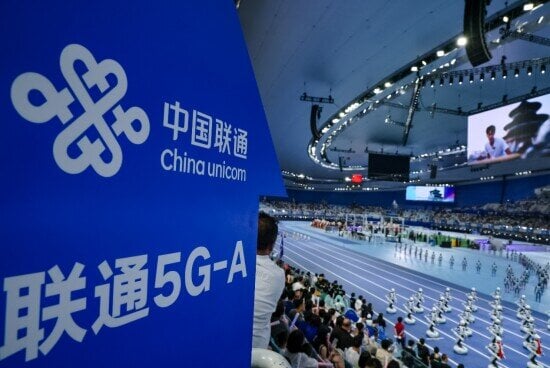
The 2nd World Humanoid Robot Games opened in Beijing, utilizing an advanced 5G-A GigaUplink network deployed by China Unicom Beijing and Huawei. The network was specifically designed to support real-time robot telemetry, precise control signaling, and multi-robot coordination across 51 events, which feature over 2,050 humanoid robots. By leveraging a dedicated 100 MHz network alongside a 300 MHz LampSite indoor system, the deployment ensures end-to-end latency remains under 30 milliseconds. This low latency enables the millisecond-level decision-making and obstacle avoidance required for complex autonomous competition formats.
The deployment also features China's first embodied AI robot management platform, which assigns a unique network ID to each robot for real-time monitoring of its location and operational metrics during the event. In addition to safeguarding mission-critical connectivity for the robots, the network dynamically allocates resources to prioritize core services for spectators, ensuring stable access for digital ticketing as well as data-intensive applications like live streaming. Executives from both companies emphasized that this real-world application of 5G-A technology will serve as a foundation for the broader deployment of Mobile AI in sectors such as industrial automation and smart city infrastructure.
Additional Context
This section provides technological and market background not explicitly detailed in the original release.
The shift toward embodied AI—where AI agents interact with the physical world via robotic hardware—fundamentally changes network requirements. Traditional mobile networks were built for downlink-heavy consumer traffic, such as video streaming. However, autonomous humanoid robots require massive uplink capacity to transmit high-definition video and sensor data to cloud-based "robotic brains" for real-time processing. To address this, the 5G-Advanced (5G-A) solution utilized by Huawei and China Unicom relies on a 3.5 GHz 2CC + 2.1 GHz SUL (Supplementary Uplink) architecture. This configuration aggregates multiple frequency bands to maximize uplink throughput, ensuring human-like response latencies that are critical for safety and precision when robots operate autonomously in dynamic environments.
Edited by Lekshman Ramdas, Induportals editor – adapted by AI.
www.huawei.com
