
www.industry-asia-pacific.com
25
'26
Written on Modified on
KBR Awarded Contract for Kazakhstan’s First SAF Production Plant
KBR will license the proprietary PureSAF technology, invented and developed by Swedish Biofuels AB, and provide proprietary engineering design.
www.kbr.com
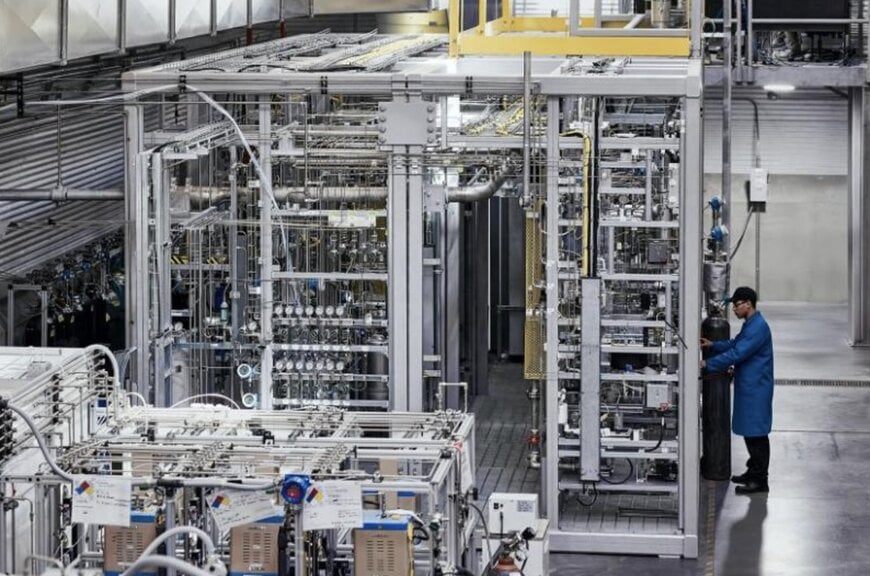
KBR has been awarded a technology licensing and proprietary engineering design contract by KazMunayGas-Aero and KazFoodProducts for Kazakhstan’s first Sustainable Aviation Fuel production facility.
KBR will provide proprietary engineering and license its PureSAF technology for the new facility, which will convert domestically produced, alcohol-based agricultural feedstocks into aviation fuel using an alcohol-to-jet process.
Strategic Alignment and Agricultural Value Chain Integration
The project aligns with Kazakhstan's national strategic directive to develop the country into a regional and international aviation hub with expanded transit capacity. By utilizing locally cultivated agricultural feedstocks, the plant will establish an integrated, low-carbon supply chain that converts agricultural raw materials into low-emission aviation fuels.
PureSAF Technology Overview
Invented and developed by Swedish Biofuels AB and globally licensed by KBR, PureSAF technology produces synthetic aviation kerosene through a modular alcohol-to-jet process pathway. The technology processes a wide range of alcohol feedstocks, including bioethanol and isobutanol, to yield drop-in aviation fuel. The award builds on KBR's expanding portfolio of low-carbon energy transition and aviation decarbonization projects.
Additional Context
This section details technical specifications not included in the original news release.
The Alcohol-to-Jet process converts alcohol precursors (such as C2 to C5 bio-alcohols derived from agricultural starch, sugar, or cellulosic fermentation) into synthetic paraffinic kerosene through four primary catalytic steps: catalytic dehydration of the alcohol to produce alkenes (olefins), oligomerization to build higher-molecular-weight branched olefin chains matching aviation fuel distillation ranges, hydrogenation to saturate intermediate alkenes into stable paraffins, and final fractionation into aviation kerosene, renewable diesel, and naphtha fractions.
Unlike conventional ATJ pathways that produce only synthetic paraffinic kerosene (ATJ-SPK) without aromatics—requiring blending with fossil kerosene to achieve the minimum 8 percent aromatic content necessary for fuel system elastomer seal swelling—PureSAF produces alcohol-to-jet synthetic kerosene with aromatics (ATJ-SKA). This pathway satisfies ASTM D7566 Annex 8 standards, allowing the produced drop-in fuel to match the density, viscosity, freeze point (below minus 47 degrees Celsius), and elastomer compatibility profile of conventional Jet A and Jet A-1 aviation turbine fuels.
Edited by Romila DSilva, Induportals Editor, with AI assistance.
