
www.industry-asia-pacific.com
09
'26
Written on Modified on
EUTECT Debuts Selective Soldering Technologies at productronica India 2026
Company showcases automated selective soldering systems and customized manufacturing solutions for high-reliability electronics production.
eutect.de
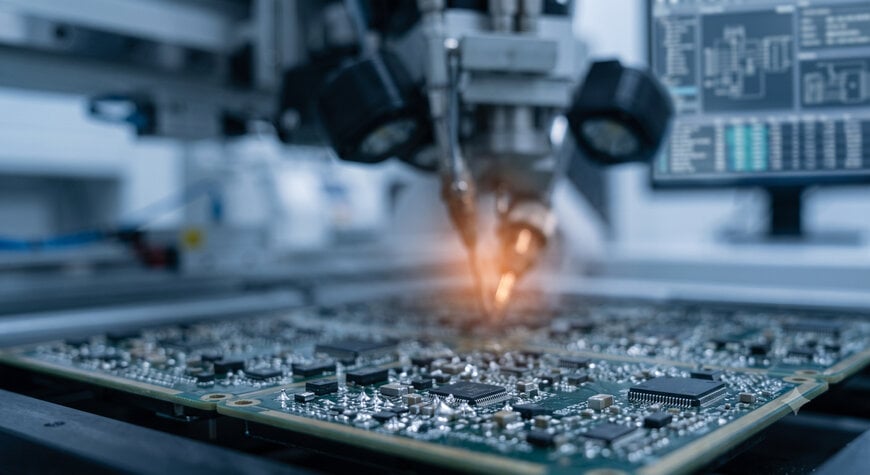
AI Generated Image
EUTECT will present its specific selective soldering technologies and automation platforms for electronics manufacturing at the productronica India 2026 exhibition, scheduled for September 16 to 18, 2026, in Bengaluru, India. The deployment of these systems provides advanced joining technologies for the automotive, medical, defense, and telecommunications sectors, integrating reliable manufacturing solutions into local production environments.
Process Integration within the Automotive Data Ecosystem
High-precision selective soldering processes are required for complex, thermally demanding assemblies used in power electronics and aerospace. The technology portfolio engineered by EUTECT includes mini wave soldering, laser soldering, induction soldering, thermode soldering, and piston soldering systems. Combining these processes with closed-loop control systems and intelligent process monitoring allows manufacturers to maintain reproducible manufacturing cycles with verified process reliability. Implementing these bespoke selective soldering systems addresses the structural requirements of the automotive data ecosystem, where seamless process control and data traceability dictate component acceptance.
Automated Manufacturing Concepts and Component Masking
Establishing economic viability in high-mix electronics production depends on customized physical interfaces. EUTECT develops bespoke workpiece carriers and soldering masks alongside its core soldering processes to stabilize highly sensitive printed circuit boards during thermal exposure. This hardware integration protects adjacent components from thermal stress, enabling safe processing of densely populated assemblies. By structuring application-specific manufacturing concepts, the equipment facilitates the transition from initial process evaluation to full series production, ensuring that specialized joined assemblies meet standardized global quality criteria.
Additional Context:
This section details technical specifications and competitive benchmarking not included in the original product announcement
Within the automated selective soldering market, EUTECT modular systems operate in the same technical space as equipment from manufacturers like Pillarhouse and Kurtz Ersa. Standard mini-wave selective soldering platforms typically utilize nitrogen inertion to reduce solder dross and improve joint wetting. While traditional wave soldering systems process entire boards simultaneously with cycle times often under 30 seconds, they expose the entire assembly to thermal shock. Selective soldering targets only specific through-hole components, extending cycle times to 1 to 2 minutes per board depending on the joint count, but significantly reducing thermal stress on adjacent surface-mount technology components. Furthermore, modular systems utilizing laser soldering provide localized energy input via a focused optical beam, generating pinpoint solder joints without physical contact, a measurable operational metric required for sensitive medical and defense applications where mechanical stress is prohibited.
Edited by Natania Lyngdoh, Induportals editor, assisted by AI.
www.eutect.com
EUTECT will present its specific selective soldering technologies and automation platforms for electronics manufacturing at the productronica India 2026 exhibition, scheduled for September 16 to 18, 2026, in Bengaluru, India. The deployment of these systems provides advanced joining technologies for the automotive, medical, defense, and telecommunications sectors, integrating reliable manufacturing solutions into local production environments.
Process Integration within the Automotive Data Ecosystem
High-precision selective soldering processes are required for complex, thermally demanding assemblies used in power electronics and aerospace. The technology portfolio engineered by EUTECT includes mini wave soldering, laser soldering, induction soldering, thermode soldering, and piston soldering systems. Combining these processes with closed-loop control systems and intelligent process monitoring allows manufacturers to maintain reproducible manufacturing cycles with verified process reliability. Implementing these bespoke selective soldering systems addresses the structural requirements of the automotive data ecosystem, where seamless process control and data traceability dictate component acceptance.
Automated Manufacturing Concepts and Component Masking
Establishing economic viability in high-mix electronics production depends on customized physical interfaces. EUTECT develops bespoke workpiece carriers and soldering masks alongside its core soldering processes to stabilize highly sensitive printed circuit boards during thermal exposure. This hardware integration protects adjacent components from thermal stress, enabling safe processing of densely populated assemblies. By structuring application-specific manufacturing concepts, the equipment facilitates the transition from initial process evaluation to full series production, ensuring that specialized joined assemblies meet standardized global quality criteria.
Additional Context:
This section details technical specifications and competitive benchmarking not included in the original product announcement
Within the automated selective soldering market, EUTECT modular systems operate in the same technical space as equipment from manufacturers like Pillarhouse and Kurtz Ersa. Standard mini-wave selective soldering platforms typically utilize nitrogen inertion to reduce solder dross and improve joint wetting. While traditional wave soldering systems process entire boards simultaneously with cycle times often under 30 seconds, they expose the entire assembly to thermal shock. Selective soldering targets only specific through-hole components, extending cycle times to 1 to 2 minutes per board depending on the joint count, but significantly reducing thermal stress on adjacent surface-mount technology components. Furthermore, modular systems utilizing laser soldering provide localized energy input via a focused optical beam, generating pinpoint solder joints without physical contact, a measurable operational metric required for sensitive medical and defense applications where mechanical stress is prohibited.
Edited by Natania Lyngdoh, Induportals editor, assisted by AI.
www.eutect.com
