
www.industry-asia-pacific.com
19
'26
Written on Modified on
ABB regenerative drives cut crane energy consumption at New Zealand Steel
Modernisation of a large casting bay gantry crane with ABB regenerative drives delivered significant energy savings, exceeding expectations while improving operational efficiency and reliability.
global.abb
Application Area: Industrial Gantry Crane Modernization, Variable Speed Drives (VSD), Energy Recovery Systems
Industry Sector: Metallurgy, Heavy Machinery, Steel Manufacturing
New Zealand Steel has deployed ABB ACS880 regenerative variable speed drives across its heavy casting bay infrastructure to replace legacy, non-regenerative motor drive networks. The technical deployment integrates direct energy recovery capabilities into the primary vertical and horizontal motion controls of a critical 125-tonne casting bay gantry crane. By shifting from traditional resistive braking architectures to an active regenerative platform, the facility maintains process reliability across its continuous steel-making operations, eliminates monthly dust-clearance maintenance routines, and cuts active electricity consumption.
Overcoming Thermal Resistor Vulnerabilities and Production Continuity Risks
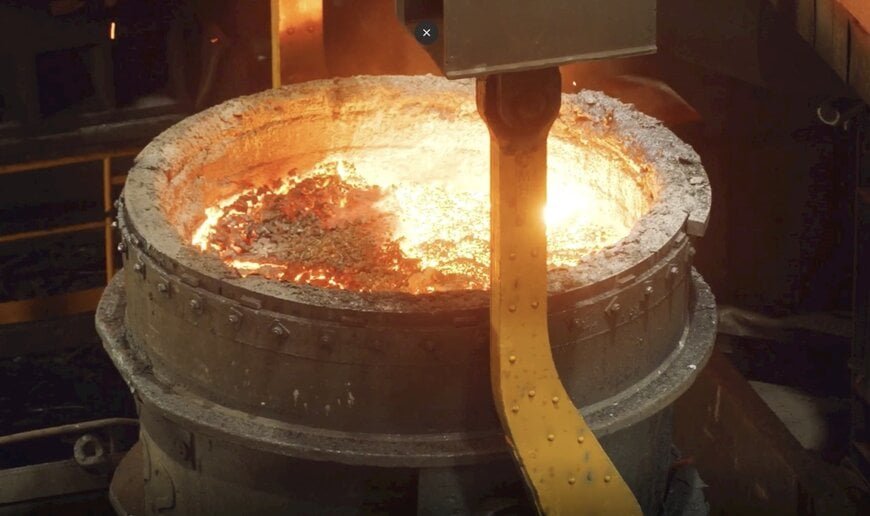
High-volume steel manufacturing facilities operating under harsh environmental conditions face strict reliability metrics across their primary material-handling fleets. At the New Zealand Steel fully integrated mill, the casting bay relies on two West 125 Tonne (W125T) cranes to transfer 80-tonne ladles of molten steel to slab and billet casting machines. Because the continuous production line generates around 670,000 tonnes of steel annually, any simultaneous failure of these heavy cranes would halt the casting machines, causing immediate throughput losses and substantial financial penalties.
Operationally, the legacy drive setups relied on eight rooftop brake resistor cabinets connected via heavy electrical cabling to dissipate the massive counter-electromotive force generated during crane lowering cycles. In a dusty steel mill environment, these dynamic resistors required labor-intensive monthly maintenance flushes to prevent accumulated dust from causing localized overheating and structural electrical failures. Furthermore, executing this maintenance meant technicians had to work at a height of 23 meters within highly restricted physical spaces. To mitigate these dynamic failure points and lower facility energy expenses, the company initiated an industrial motor control modernization.
Deploying Active Braking Software to Optimize Energy Recovery Architecture
The installation and deployment of the five modern regenerative drives transformed the facility's crane control systems into an audited, energy-efficient digital workflow:
- Direct Mechanical Regeneration: The modern drive modules replace the legacy braking resistors by converting kinetic energy generated during deceleration and downward hoist cycles back into clean electrical energy. This recovered power is immediately returned to the plant's local grid, achieving a 40% to 45% reduction in electricity consumption during the initial operating phases.
- Elimination of Thermal Dissipation Infrastructure: By routing excess electrical energy back into the power line, the installation allowed engineers to completely remove all eight rooftop brake resistor cabinets and their associated heavy connecting cables. This removal permanently eliminates a major point of component failure and eliminates the hazardous monthly dust-clearing routine.
- Streamlined Commissioning and Parametric Monitoring: Automation engineers utilized intuitive software configuration tools to establish precise torque-proving and anti-sway firmware profiles. This software-defined setup ensures safe load handling and structural path control from the very first active lift cycle.
- Compacted High-Elevation Installation: Despite complex logistical constraints—including navigating narrow roof hatches and working 23 meters above the shop floor—the system was deployed on schedule. The resulting modernization provides a reliable, standard drive platform that protects continuous casting uptime while reducing localized maintenance costs.
Additional Context
The section below examines technical specifications not included in the original application story.
Overhauling Dynamic Braking Methods
Traditional heavy-hoist crane systems dissipate regenerative electrical energy as waste heat through large resistor banks. Transitioning to a bidirectional, line-regenerative variable speed drive architecture fundamentally alters the electrical profile of the crane system:
The section below examines technical specifications not included in the original application story.
Overhauling Dynamic Braking Methods
Traditional heavy-hoist crane systems dissipate regenerative electrical energy as waste heat through large resistor banks. Transitioning to a bidirectional, line-regenerative variable speed drive architecture fundamentally alters the electrical profile of the crane system:
- Active Front End (AFE) Inversion: Regenerative drives utilize an active supply unit with insulated-gate bipolar transistors (IGBTs) instead of conventional diode bridges. This allows the drive to synchronize the voltage and frequency of the regenerated power back to the factory line, converting braking deceleration into usable power rather than ambient heat.
- Power Quality Enhancement: Integrated LCL filters suppress total harmonic distortion (THD) down to values below 5%, preventing electrical noise from corrupting delicate shop-floor automation or surrounding PLC networks.
- Dynamic Brake Reliability: Removing high-temperature resistor grids drops localized control cabinet ambient temperatures, reducing the thermal stress applied to neighboring electronic relays, power cables, and contactors.
Structural Comparison of Industrial Drive Architectures
Transitioning from standard dynamic braking resistors to an active line-regenerative system establishes distinct operational changes across heavy material handling cells:
Transitioning from standard dynamic braking resistors to an active line-regenerative system establishes distinct operational changes across heavy material handling cells:
- Energy Efficiency: Under a traditional resistive braking framework, efficiency is low because kinetic energy is completely lost as thermal waste. Conversely, a line-regenerative architecture provides high efficiency, generating documented 40% to 45% drops in grid electricity use by capturing power from lowering cycles.
- Maintenance Intensity: Legacy setups suffer from high maintenance intensity due to mandatory, hazardous dust clearing from elevated resistor cabinets to avoid overheating. A regenerative setup yields low maintenance intensity, completely removing the resistor banks, heavy cabling, and associated cleaning schedules.
- Operational Footprint: On-floor space requirements are high in legacy configurations because massive external cooling enclosures are needed to house high-voltage resistor arrays. The modern integrated drive network maintains a low footprint, consolidating all rectification, inversion, and line-filtering hardware within a standard standalone control enclosure.
Edited by Romila DSilva, Induportals Editor, with AI assistance.
