
www.industry-asia-pacific.com
13
'26
Written on Modified on
Next-generation fuel-efficient truck engine platform
Volvo Trucks launches new 13-liter diesel and gas engines designed for renewable fuels and future hydrogen applications, delivering improved fuel efficiency, lower emissions and higher performance.
www.volvotrucks.com
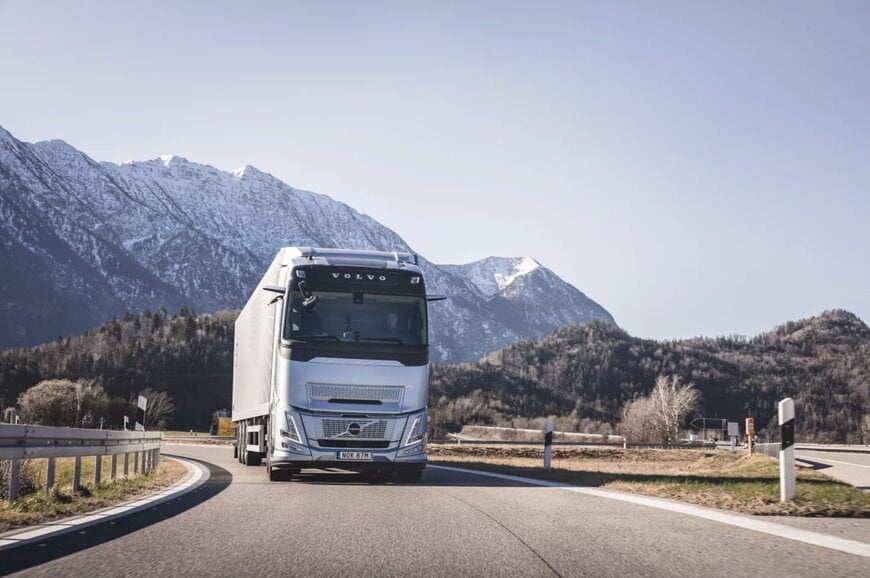
Volvo Trucks has introduced a new 13-liter engine platform designed to reduce fuel consumption and support the transition toward renewable energy sources.
The internal development project has resulted in a driveline system compatible with multiple fuel types, including renewable diesel, gas, and future hydrogen applications. This technical approach aims to decrease operational emissions while improving drivability across global transport segments.
Optimization of Fuel Efficiency within the Automotive Data Ecosystem
The relevance of the new engine platform is defined by its ability to achieve up to a 4% reduction in fuel consumption compared to its predecessors. This performance gain is realized through redesigned cylinders, new turbocharger configurations, and an updated version of the I-Shift transmission. Within the automotive data ecosystem, the integration of the I-Roll feature with engine stop/start functionality allows the vehicle to automatically cease engine operation during downhill phases. This mechanism validates fuel and emission reductions through real-time operational data.
Technical Implementation of Renewable Fuel Capabilities
Technical applications for the D13 and G13 engine variants include a power range from 380 to 560 hp with torque levels up to 2,900 Nm. The platform supports a sustainable digital supply chain by facilitating the use of alternative fuels such as Bio-LNG, HVO, and B100. All units comply with Euro 6 emission standards and NNR3 noise regulations, ensuring adherence to international environmental requirements. Sales for these engines, which will be available for Volvo FM, FMX, FH, and FH Aero models, are scheduled to commence in the third quarter of 2026.
Additional Context
This section details technical specifications and competitive benchmarking not included in the original product announcement.
In contrast to conventional combustion platforms, Volvo’s new architecture provides multi-fuel flexibility that enables a transition to green hydrogen without requiring a complete driveline replacement. While many competing solutions focus on the optimization of a single fuel type, this integrated platform approach utilizes modularity to manage resources more efficiently across diverse climates. Simulation data indicates that the combination of FH Aero aerodynamics with this next-generation engine results in a cumulative efficiency increase of up to 9% compared to 2023 standard models, offering a measurable advantage in total cost of ownership (TCO) for fleet operators.
Edited by Romila DSilva, Induportals editor, with AI assistance.
www.volvotrucks.com
