
www.industry-asia-pacific.com
12
'26
Written on Modified on
SEEPEX launches Easy Maintenance Macerator
Targeting solids control in wastewater pumping, the new macerator design focuses on faster servicing, reversible wear parts, and throughput up to 100 m³/h.
www.seepex.com

Easy Maintenance Macerator 1
In wastewater and industrial slurry handling, fibrous solids such as wipes, swabs, and organic debris can trigger blockages that reduce pump uptime and damage downstream equipment. SEEPEX has introduced the Easy Maintenance Macerator, a new shredding unit designed to improve solids size reduction while shortening service interventions.
Why macerators matter in pump-fed sludge handling
Many liquid processing streams are pumpable suspensions but still contain disruptive solids—examples include cotton swabs and wet wipes in wastewater, or bones, shells, pits, and fibers in food production. If these materials pass into pumping and separation stages intact, they can clog pipelines and interfere with connected equipment.
The Easy Maintenance Macerator is positioned to homogenize sludge by shredding solids and fibrous material before pumping, supporting steadier transport through progressive cavity pumps and reducing disruption risk across the plant process. The product is planned as part of SEEPEX’s Easy Maintenance strategy starting January 1, 2026.
Cutting unit redesign focuses on wear parts and flow path
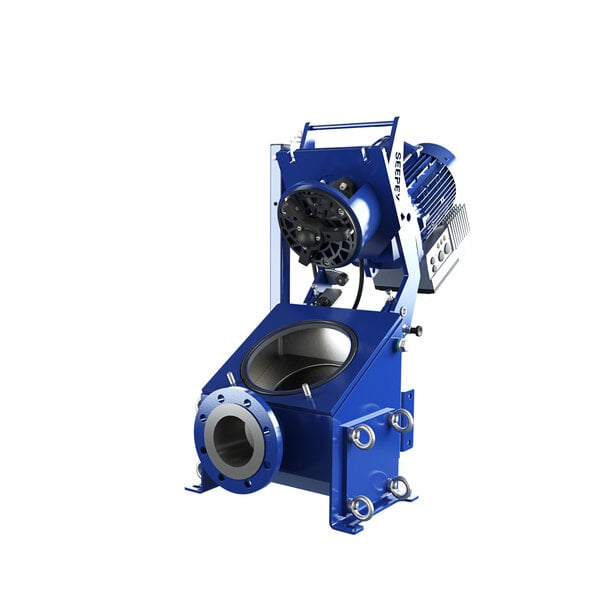
The new macerator design centers on mechanical elements that drive cutting performance and wear behavior. SEEPEX specifies a flow-optimized shear plate geometry, replaceable knives made of wear-resistant tool steel, and a reversible shearplate that allows the wear surface to be used on both sides.
These features are intended to reduce entanglement and sustain fine shredding performance over longer operating periods, particularly in media containing fibers. Beyond protecting SEEPEX progressive cavity pumps, the macerator is also designed to reduce mechanical stress on downstream equipment such as centrifuges and screw presses by limiting large solids carryover.
Throughput and motor sizing for wastewater duty
SEEPEX rates the Easy Maintenance Macerator for throughput of up to 100 m³/h. The unit is offered with motor ratings of 1.5 kW (standard), 2.2 kW, and 3 kW.
The combination of shear plate geometry and knife design is intended to deliver fine shredding of solids and fibers, supporting longer, trouble-free pump operation in municipal wastewater and industrial process streams.
Maintenance access designed to reduce downtime
A key design target is serviceability. The macerator includes a foldable cutting unit designed to allow convenient opening of the machine from above, supporting maintenance and removal of foreign objects without lifting equipment.
SEEPEX also describes external mechanical adjustment for blades and a shearplate designed for quick replacement. For cleaning and foreign object removal, the company estimates interventions can be up to 80% faster than previous approaches.
Easy Maintenance Macerator 2
Reverse operation and debris separation for blockage recovery
For operational recovery during clogging events, the macerator offers optional reverse operation, enabling a change in knife rotation direction during operation. This is intended to clear blockages without opening the unit.
Additional protection is provided by an integrated debris separator. A separate cleaning flap provides direct access to the housing, enabling removal of disruptive solids without extended stoppages.
SEEPEX expects the reversible shear plate and bidirectional operation to extend macerator lifetime, targeting double the service life, and reduce spare part costs by lowering wear part consumption.
Target applications across wastewater and solids-heavy industries
SEEPEX positions the Easy Maintenance Macerator for municipal and industrial wastewater treatment applications where solids and fibers must be shredded before pumping. The company also highlights biogas production, food and beverage processing, fish processing, paper and pulp production, and sugar refineries—process environments where fibrous or coarse materials routinely enter liquid transport stages.
For installations using progressive cavity pumps, the macerator is presented as a pre-processing step to stabilize flow, reduce clogging risk, and improve system availability in solids-laden media transfer.
