
www.industry-asia-pacific.com
02
'26
Written on Modified on
The Chip Reshoring Wave and Asia’s New Semiconductor Hubs
How India, Vietnam, Malaysia, and Southeast Asia are turning supply chain disruption into opportunity.
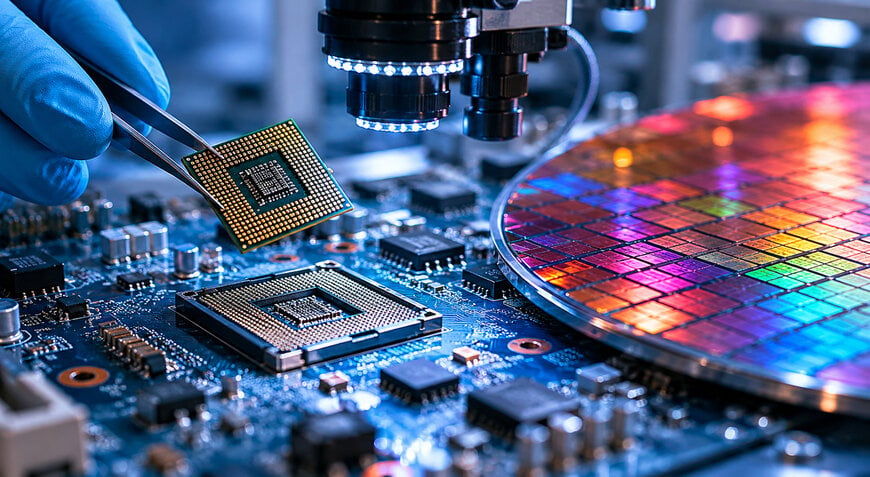
The global semiconductor map is being redrawn — not overnight, and not in a clean break from China or Taiwan, but through a steady reshuffling of investment, production, talent, and political risk.
For years, the industry followed a familiar pattern: advanced chip design led by the United States, cutting-edge fabrication concentrated in Taiwan and South Korea, and large-scale electronics assembly anchored in China. That model delivered speed and efficiency. It also created vulnerabilities.
Today, the pressure points are clear: U.S.–China technology tensions, export controls, AI-driven chip demand, the memory boom, and concerns over Taiwan’s concentration in advanced logic chips. The result is a new wave of “reshoring,” “friend-shoring,” and “China+N” strategies — with India, Vietnam, Malaysia, Singapore, Thailand, and the Philippines emerging as some of the most closely watched beneficiaries.
The timing could hardly be better. The global semiconductor industry is approaching a historic high. World Semiconductor Trade Statistics forecasts the market to reach around US$975 billion in 2026, while Deloitte expects annual sales to move toward US$2 trillion by 2036 if long-term demand from AI, data centers, automotive electronics, and industrial digitalization continues.
This is why the new Asian semiconductor story is not just about factories. It is about who can capture the next layer of value.
India: Big Ambition, Big Market, Big Bet
India has become one of the most aggressive new entrants in the semiconductor race. Its domestic semiconductor market is estimated at around US$45–50 billion in 2024–2025 and is projected to reach roughly US$100–110 billion by 2030. That growth is being driven by smartphones, electric vehicles, telecom equipment, defense electronics, data centers, and a fast-expanding domestic electronics manufacturing base.
India’s strongest advantage is scale. It has a large engineering workforce, a massive consumer market, and strong government backing through the India Semiconductor Mission and Production Linked Incentive schemes. The country is already a major smartphone assembly hub for global brands, but the bigger ambition is to move into chip design, packaging, testing, and eventually wafer fabrication.
The challenge is that semiconductor ecosystems are not built by incentives alone. India still needs deeper supplier networks, reliable utilities, experienced process engineers, specialty chemicals, gases, and equipment support. But what it lacks in maturity, it is trying to compensate for with speed, policy support, and market size.
Vietnam: From Electronics Assembly to Semiconductor Back-End Hub
Vietnam has quickly become one of Asia’s most attractive alternatives for electronics manufacturing. The country is already central to the production strategies of Samsung, Apple suppliers, Dell, and other global technology companies. Its semiconductor market is forecast by Mordor Intelligence to grow from about US$10.16 billion in 2025 to US$16.51 billion by 2030, representing a CAGR of just over 10%.
Vietnam’s next goal is to move beyond assembly. Its government has set a target to train 50,000 semiconductor engineers by 2030, while global companies are expanding back-end operations in the country.
Samsung’s reported plan to build a US$1.5 billion chip testing facility in Vietnam shows where the country’s near-term opportunity lies: not in competing directly with Taiwan’s most advanced fabs, but in becoming a stronger hub for testing, packaging, and electronics-linked semiconductor services.
Vietnam’s rise is practical. It has competitive labor costs, improving infrastructure, an export-oriented manufacturing base, and strong geopolitical appeal to companies seeking diversification. But like India, it must build a deeper technical workforce and avoid being trapped only in lower-margin assembly work.
Malaysia: Southeast Asia’s Semiconductor Veteran Moves Upstream
Malaysia is not new to semiconductors. In fact, it is one of the most established semiconductor bases in Southeast Asia, especially in assembly, testing, and packaging.
For decades, Penang and Kulim have hosted major global chip companies. Today, Malaysia is trying to turn that legacy into a higher-value ecosystem. The country’s semiconductor market is projected to grow from around US$10.85 billion in 2025 to US$16.51 billion by 2030. More importantly, Malaysia has launched a National Semiconductor Strategy targeting RM500 billion in investments by 2030 and the development of 60,000 skilled semiconductor workers.
Recent initiatives show a more confident direction. Malaysia’s first home-grown edge AI processor, MARS1000, signaled local ambitions in chip design. The country is also building a semiconductor design park and has pursued technology partnerships to strengthen design capabilities.
Malaysia’s advantage is credibility. Unlike newer entrants, it already has a functioning semiconductor base, experienced suppliers, and global investor trust. Its challenge is to move from back-end strength into design, advanced packaging, power semiconductors, and higher-margin segments without losing competitiveness.
Singapore: Small Market, Outsized Influence
Singapore remains Southeast Asia’s most advanced semiconductor hub. Although small in size, it accounts for a significant share of global semiconductor output and semiconductor equipment production. It continues to attract investments in wafer fabrication, specialty chips, equipment, materials, and R&D.
Singapore’s role is not to compete on low-cost manufacturing. Its value lies in precision, trust, infrastructure, IP protection, and connectivity to global technology companies. As supply chains become more security-sensitive, those strengths matter even more.
Thailand and the Philippines: Quiet but Important Players
Thailand is gaining attention as electronics supply chains diversify. Its supplier base has expanded strongly in recent years, supported by automotive electronics, hard disk drives, consumer electronics, and smart manufacturing.
The Philippines, meanwhile, remains important in semiconductor assembly and testing. It may not attract the same headlines as India or Vietnam, but its long experience in electronics manufacturing gives it a meaningful role in the regional ecosystem.
For both countries, the opportunity is to capture more specialized, higher-value manufacturing linked to automotive electronics, power devices, sensors, and industrial components.
ASEAN’s Bigger Opportunity — and Bigger Problem
Taken together, ASEAN has the potential to become one of the world’s most important semiconductor regions.
Mordor Intelligence estimates the ASEAN semiconductor market at about US$135.43 billion in 2025, with growth projected to reach US$191 billion by 2030. Other market estimates are even more bullish, with some forecasts placing the region above US$200 billion in the early 2030s.
This growth is being powered by AI infrastructure, electric vehicles, 5G, industrial automation, consumer electronics, and the global search for more resilient supply chains.
But ASEAN’s challenge is coordination. Every country wants chip design. Every country wants advanced packaging. Every country wants foreign investment, high-skilled jobs, and technology transfer.
The ASEAN Framework for Integrated Semiconductor Supply Chains is a useful step because it recognizes that no single Southeast Asian country can do everything alone. Malaysia may lead in back-end semiconductor expertise. Singapore may anchor advanced manufacturing and R&D. Vietnam may scale electronics and testing. Thailand may deepen automotive electronics. The Philippines may strengthen assembly and testing. Indonesia may support the ecosystem through critical minerals and industrial scale.
The opportunity is regional complementarity. The risk is regional competition.
Taiwan and China Still Define the Reality
For all the talk of reshoring, Taiwan remains irreplaceable in the near term.
Taiwan still dominates the most advanced logic chip production, particularly through TSMC. The AI boom has only reinforced that position. Advanced GPUs, AI accelerators, and high-performance computing chips still depend heavily on Taiwan’s foundry ecosystem.
China, meanwhile, remains deeply embedded in global electronics supply chains. Even when final assembly shifts to India, Vietnam, or Thailand, many components, materials, printed circuit boards, and sub-tier suppliers still trace back to China.
This means the new semiconductor map is not a clean decoupling. It is a more complicated web — more diversified, more expensive, more political, and more difficult to manage.
The Cost of Resilience
Supply chain diversification brings security, but it also brings cost.
Companies are building duplicate capacity, qualifying new suppliers, training new workers, and managing more complex logistics networks. Governments are offering subsidies and incentives to attract projects that may not have been commercially viable under the old efficiency-first model.
This is the “resilience premium.” Electronics may become more secure, but not necessarily cheaper.
For emerging Asian hubs, however, the upside is enormous. Semiconductor investment brings jobs, technology transfer, supplier development, and a stronger position in the global technology economy.
The Real Race: Moving Up the Value Chain
The next decade will determine whether Asia’s new semiconductor hubs remain support bases or become true innovation centers.
India has the market and ambition. Vietnam has speed and manufacturing momentum. Malaysia has experience and semiconductor depth. Singapore has trust and technology sophistication. Thailand and the Philippines have strong electronics foundations.
But factories alone will not be enough.
The real winners will be countries that can build talent, attract ecosystem partners, support local suppliers, protect intellectual property, and move into higher-value areas such as chip design, advanced packaging, compound semiconductors, automotive chips, and AI-related components.
The chip reshoring wave is not just moving production from one country to another. It is creating a new semiconductor geography — one where Asia remains central, but the center of gravity is becoming more distributed.
For India and Southeast Asia, this is more than a supply chain opportunity. It is a once-in-a-generation chance to climb the technology ladder.
Article contributed by Kathryn Gerardino-Elagio, Editor-in-Chief, Ringier Trade Media, South East Asia.
