
www.industry-asia-pacific.com
03
'26
Written on Modified on
AUTOMOTIVE: Electrification 2.0 and the Rise of Southeast Asia's EV Supply Chain
Southeast Asia shifts from EV adoption to building a localized electrification ecosystem, driving supply chain resilience and reshaping its role in the global automotive industry.
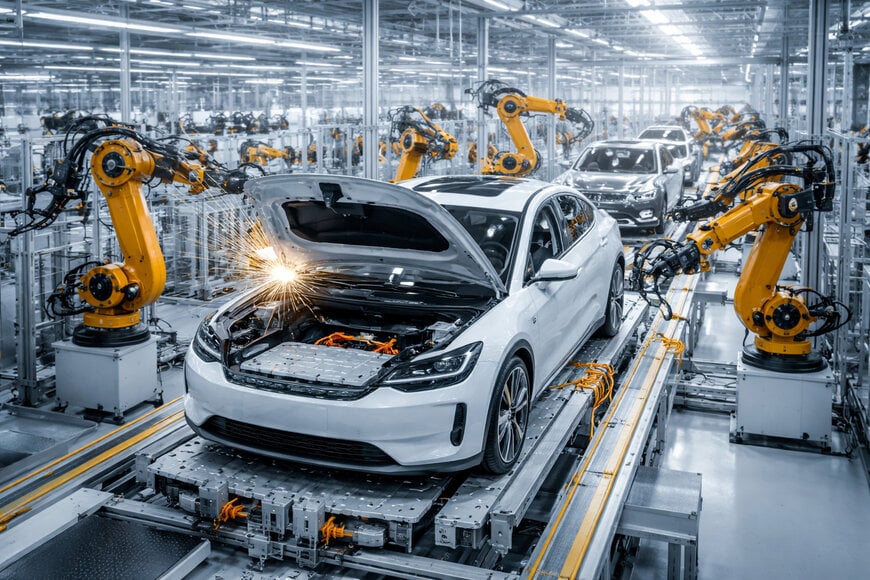
Southeast Asia’s electric vehicle (EV) story is no longer just about whether consumers will adopt EVs. That question has largely been answered. What we are seeing now is something more fundamental—a transition toward building an entire industrial ecosystem around electrification.
EV penetration in the region has risen sharply in just a few years, climbing from just over 3% in 2023 to close to 10% in 2025. Market forecasts suggest this could exceed 13% in the near term, with strong double-digit growth continuing throughout the decade. But the real story is not just about sales volumes. It is about how Southeast Asia is repositioning itself within the global automotive value chain.
Governments are no longer focused solely on incentives for buyers. Instead, they are actively shaping policies to attract investment in batteries, vehicle assembly, and critical components. This marks the beginning of what many in the industry are calling Electrification 2.0—a phase defined by localization, supply chain resilience, and industrial strategy.
From Import Market to Production Hub
What makes Southeast Asia particularly compelling is the way each country is carving out a distinct role in the EV ecosystem.
Indonesia, for instance, has leveraged its vast nickel reserves to become central to the global battery conversation. By restricting exports of raw materials and encouraging domestic processing, it has successfully drawn in large-scale investments in battery production. This has shifted the country’s position from a resource supplier to a key player in higher-value manufacturing.
Thailand, long known as the “Detroit of Asia,” is adapting quickly to maintain that status in the electric era. Its EV roadmap is not experimental—it is industrial. With clear production targets and attractive incentives, the country continues to attract global manufacturers looking for a stable and well-established automotive base.
Vietnam, on the other hand, is taking a more vertically integrated approach. Rather than relying heavily on foreign OEMs, it is building its ecosystem around a domestic champion, supported by policy and infrastructure development.
Together, these strategies are transforming the region from a fragmented consumer market into a collective manufacturing platform.
BYD — Speed and Scale in Market Entry
One of the clearest indicators of Southeast Asia’s growing importance is the pace at which Chinese automakers are expanding into the region. BYD, in particular, has moved aggressively, establishing local production in Thailand while rapidly scaling its presence across ASEAN markets.
What sets BYD apart is not just speed, but its ability to integrate battery technology, vehicle production, and pricing strategy. Its models are often positioned at price points that resonate strongly with Southeast Asian consumers, making EV ownership more accessible.
This has allowed the company to gain early traction in markets where traditional automakers have taken a more cautious approach. In many ways, BYD’s expansion reflects a broader shift—where newer players are able to capitalize on timing, flexibility, and cost efficiency to establish a foothold.
VinFast — Building an Ecosystem from the Ground Up
Vietnam’s approach to electrification stands out for its ambition. At the center of this strategy is VinFast, which has rapidly developed from a domestic automaker into a global EV brand.
What makes VinFast notable is not just its vehicles, but the ecosystem it is building around them. From charging infrastructure to battery initiatives, the company is taking a vertically integrated approach that allows it to control multiple layers of the value chain.
This strategy has enabled faster deployment and greater alignment with national goals. It also reflects a broader trend in Southeast Asia, where governments are increasingly supporting local champions as a way to accelerate industry development.
Hyundai Motor Company — Aligning with Resource Strategy
For global automakers, Southeast Asia is becoming less about market entry and more about strategic positioning. Hyundai’s investments in Indonesia are a good example of this shift.
Rather than focusing solely on vehicle assembly, the company is building an integrated ecosystem that includes battery production. This aligns closely with Indonesia’s ambition to become a global EV battery hub.
By linking manufacturing with raw material access and government incentives, Hyundai is effectively future-proofing its regional operations. It also highlights how supply chain considerations are now central to investment decisions in the EV era.
The Rise of Batteries, Electronics, and Semiconductors
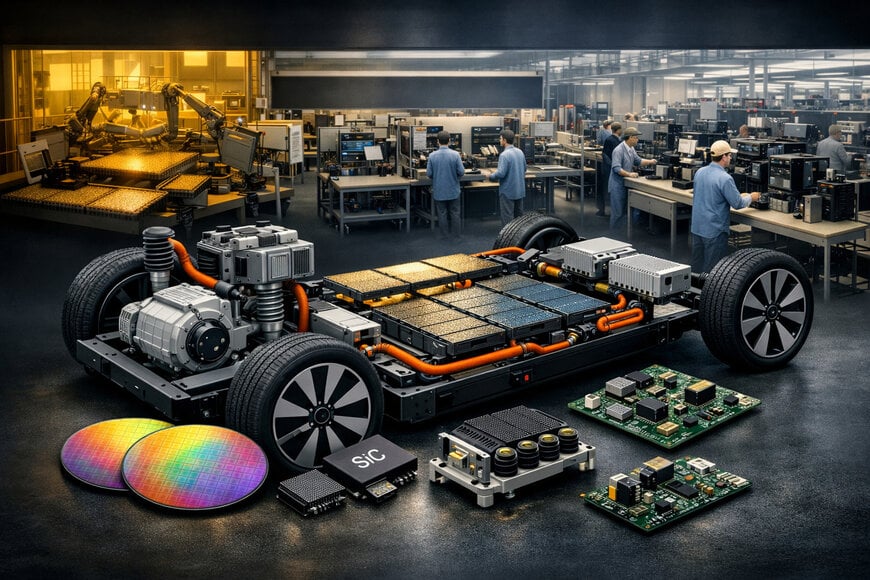
Electrification is fundamentally changing where value is created in the automotive industry. Mechanical systems are giving way to electrical and electronic components, shifting the focus toward batteries, power electronics, and semiconductors.
This plays directly into Southeast Asia’s strengths. Countries such as Malaysia and Vietnam already have established electronics manufacturing sectors, and these capabilities are now being extended into automotive applications.
The result is a growing convergence between automotive and electronics supply chains. As EV adoption accelerates, demand for components such as battery management systems and power modules is expected to rise significantly, creating new opportunities for regional suppliers.
The Gap That Defines the Market
Despite strong growth, infrastructure remains one of the region’s biggest constraints.
Southeast Asia added around 47,000 public charging points in 2025 alone, bringing the total to approximately 78,000. However, this still translates to only one charger for every 14 EVs—well behind more mature markets.
Looking ahead, the region is expected to require as many as 1.2 million public chargers by 2030, representing an investment opportunity of US$12–15 billion.
What makes infrastructure particularly challenging in Southeast Asia is not just scale, but context. Grid capacity is often limited, especially outside major urban centers, and environmental conditions—heat, humidity, and heavy rainfall—place additional demands on equipment reliability.
These factors mean that infrastructure solutions must be adapted to local realities rather than imported wholesale from other markets.
A Market Shaped by Two-Wheelers and Commercial Demand
Another defining feature of Southeast Asia’s EV transition is its vehicle mix. Unlike Europe or North America, where passenger cars dominate, two-wheelers account for the majority of vehicles on the road.
This has led to the rapid development of battery-swapping networks and alternative ownership models, particularly in countries like Indonesia and Vietnam. In many cases, electrification is happening first in the two-wheeler segment, driven by delivery services and ride-hailing platforms.
At the same time, commercial fleets are emerging as a key driver of EV adoption. Logistics companies, in particular, are under pressure to reduce costs and emissions, making EVs an increasingly attractive option. For these operators, the decision to electrify is often based on economics rather than policy alone.
Tier-1 Suppliers Under Pressure to Adapt
For Tier-1 suppliers, Electrification 2.0 represents a turning point. The shift away from internal combustion engines is forcing a transition toward new capabilities, including electric drivetrains, battery systems, and software integration.
OEMs are also placing greater emphasis on localization, requiring suppliers to establish a stronger presence within Southeast Asia. This is accelerating investment in regional manufacturing, as well as partnerships with local companies.
The result is a supply chain that is becoming both more regionalized and more interconnected, with closer alignment between automakers, suppliers, and governments.
A Region Defining Its Own Path
Southeast Asia’s electrification journey will not follow the same trajectory as China, Europe, or North America. It will be shaped by its own economic realities, infrastructure constraints, and industrial priorities.
What is clear, however, is that the region is no longer playing a secondary role. With its growing manufacturing base, expanding supply chain capabilities, and strong market potential, Southeast Asia is becoming a key pillar in the global EV landscape.
Electrification 2.0 is not just about replacing internal combustion engines with batteries. It is about redefining how and where vehicles are built, and who controls the value chain. In that transformation, Southeast Asia is quickly moving from the sidelines to the center.
Article contributed by Kathryn Gerardino-Elagio, Editor-in-Chief, Ringier Trade Media, South East Asia.
